A Place of Learning
The most famous location at Rajgir is called Vulture’s Peak, which is where the Buddha delivered some of the most famous lessons, such as the Lotus Sutra, the Heart Sutra and the Immeasurable Life sutras were delivered to the bhikshus. Nalanda, which dates back to the 5th Century, was the home of the first Buddhist university and boasted having more than 10,000 students spread across a massive campus.
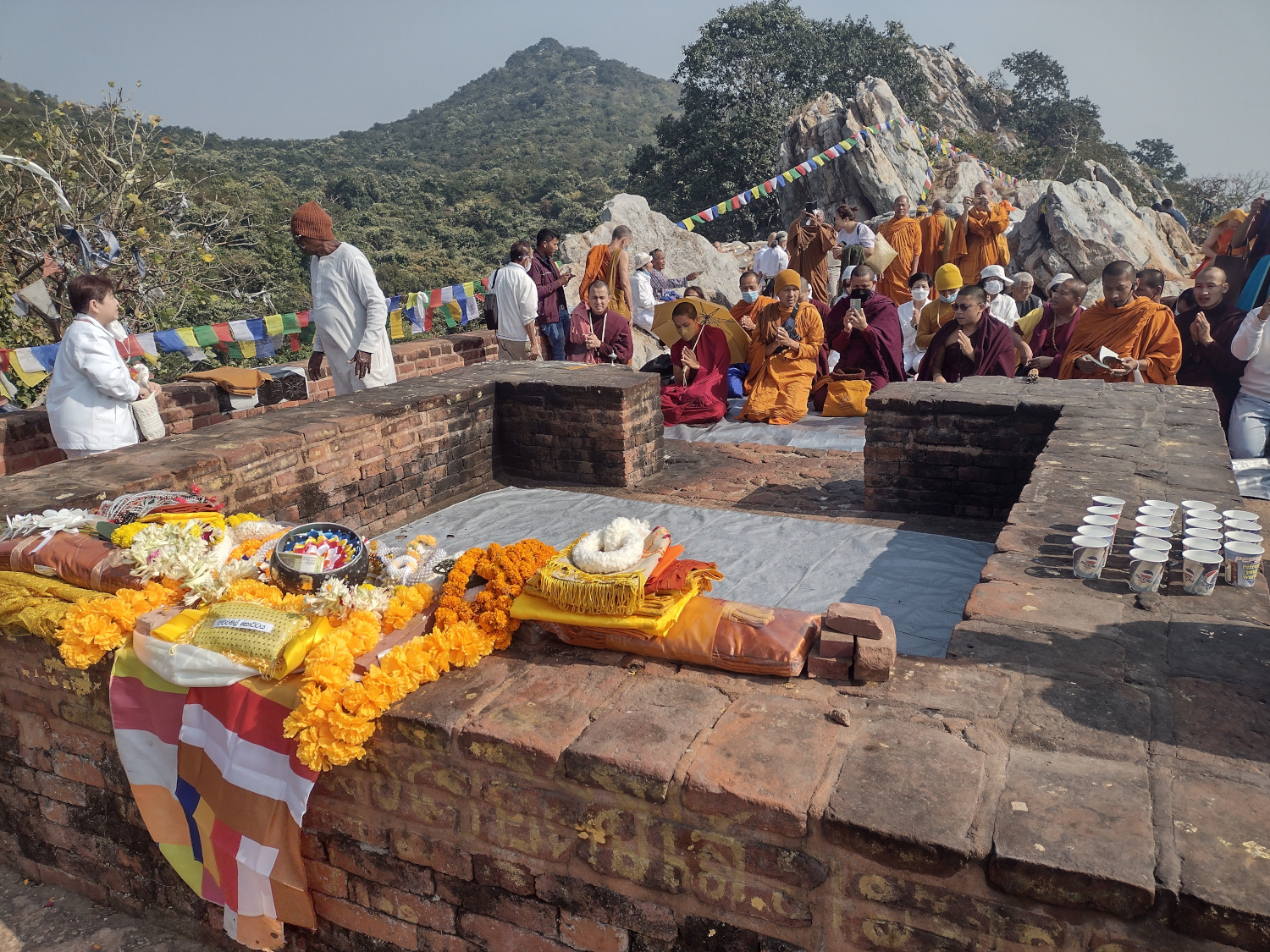
In addition to being the physical place I visited, which is basically a platform on the peak of an approximately 300-meter mountain, Vulture’s Peak is also the metaphysical place outside space and time where the eternal Buddha continues to preach the Dhamma to the 12,000 bhikshus.
Regardless, atop three peaks of the mountains now, there is the Vulture’s Peak platform itself, along with the remains of a few rooms used by monks ascetics during the ensuing centuries; a Japanese Peace Pagoda, which I believe was the fifth of those I have visited; and an Ashoka Stupa on top of a crumbled pile of rubble on the third.
Of all of these little places, I enjoyed the Ashoka Stupa most as no one else went out of their way to visit it. I could hear the chanting of the monks and pilgrims who swarmed at Vulture’s Peak and see off in the distance the Peace Pagoda and the ridge on which several Jain mandirs sit.
Also of note, along the road to Vulture’s Peak is a place called Bimbisar’s Jail, where the king of the land, who was a devout Buddhist, was imprisoned by his own son, along with the ruins of an old mango grove.
 After visiting these sites, I attempted to walk along the ridge from the Peace Pagoda to the Jain mandirs, but the jungle environment of the area prohibited me from doing so. I took a tuk-tuk back toward town and he dropped me at the entrance to the hot springs, which is also the lead up to the Saptapani Cave and ruins where the Buddha’s disciples convened after his paranirvana in order to determine how to best disseminate his teachings.
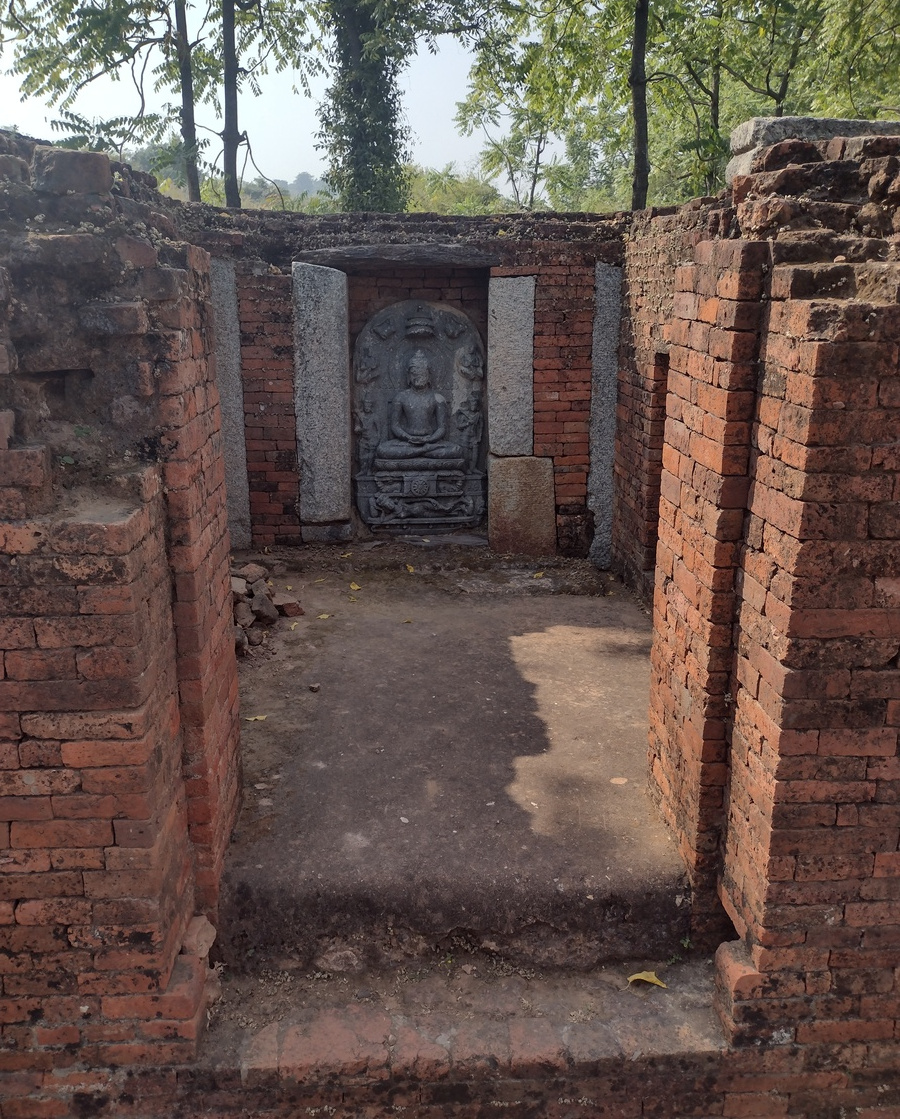
The climb up to the cave is steep and moderately strenuous and includes several Jain temples as well as the two Buddhist sites. The first is the ruins of a monastery that has very well preserved statues of the Buddha intact in the niches. The cave is a little further up the path and provides a very nice overlook of the city of Rajgir.
After descending from Saptapani, I went ahead and took a tuk-tuk all the way to Nalanda. In retrospect, I should have just taken the tuk-tuk to the Rajgir bus stand and waited for the next bus to Nalanda, which go by every 15 minutes or so and are much cheaper. Regardless, I got there and the driver dropped me right at the gate, instead of the highway which is about a kilometer from the site.
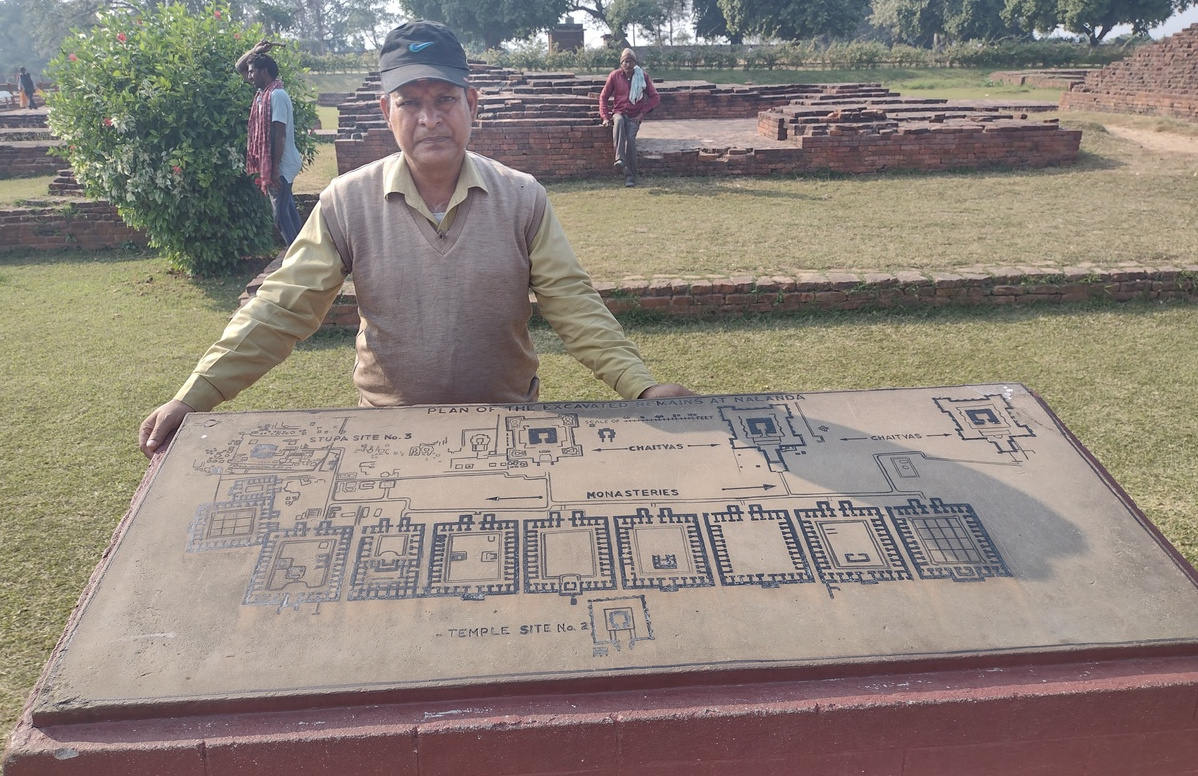 I paid the hefty 600 rupee entrance fee and made my way into the grounds. I was immediately accosted by the local guides who insisted that I would not be able to understand the site without their help. I eventually succumbed to the pressure of one guide and let him explain. In the half hour or so he explained the ruins, he offered a few tidbits of information I would not have gotten from the guidebooks or internet resources I was using – such as pointing out the room where Xuanzang (aka Hiuen Tsan), the famous Chinese explorer of the Buddhist pilgrimage path, stayed during his time at the university.
In addition to the dozen or so dormitories, which are arranged around a central courtyard with their own kitchens, the Nalanda site, which is estimated to have covered 50-square-kilometers at its peak, also features several temples and a large and ornate stupa build by Emperor Ashoka in honor of the Buddha’s wisest disciple, Sariputra.
I spend over an hour at the excavated grounds before visiting the museum just across the street from the site, which was mere 5 rupees to enter. There were lots of statues and bronze work done by the artisans who studied and perfected their skills at the university.
Getting back to Rajgir was very easy via a shared tuk-tuk that rolled by and a bus that showed up 5 to 10 minutes after I got to the highway.
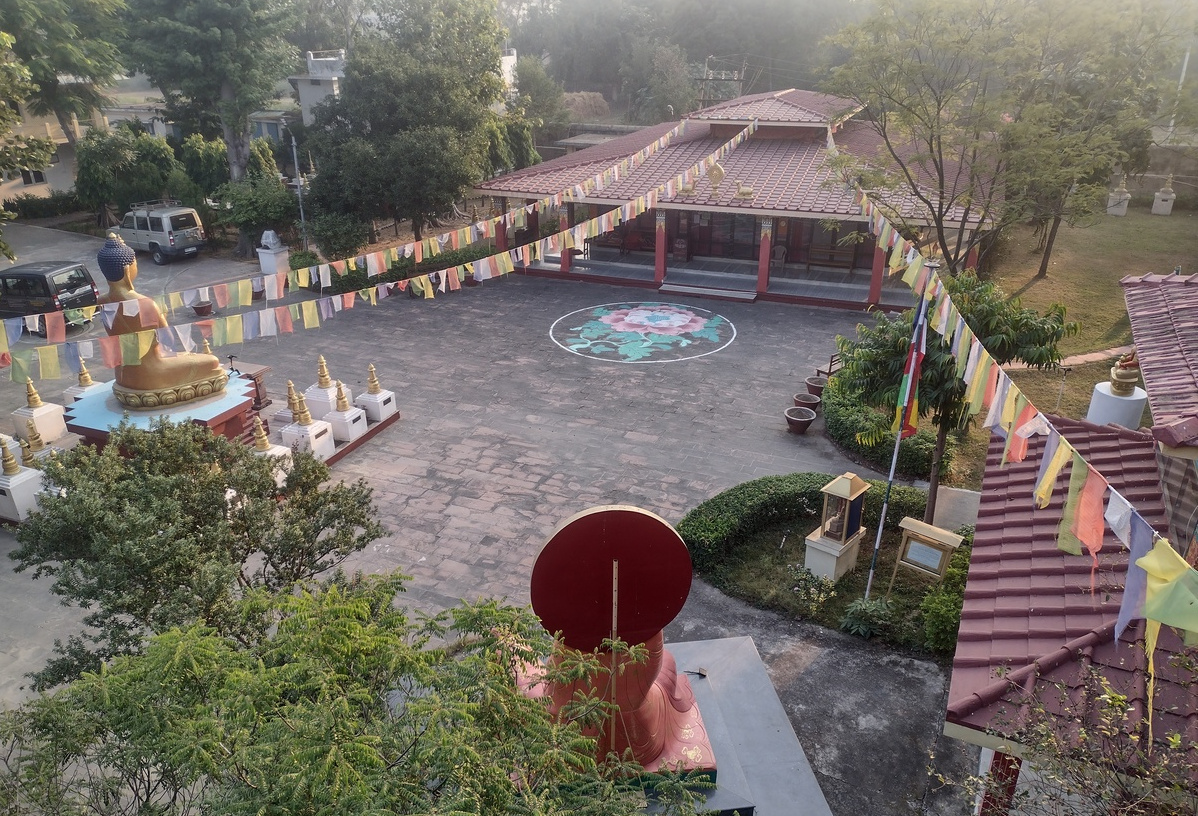 I checked into the Root Institute, which is a Tibetan Buddhist center maintained by the Foundation for the Preservation of Mahayana Tradition, that runs Tushita, where I practiced meditation at Dharamshala, and the Kopan Monastery at Kathmandu, which I unfortunately did not get a chance to visit. I had signed up for a weekend yoga retreat at Root but had a couple of extra days to explore before the classes began.
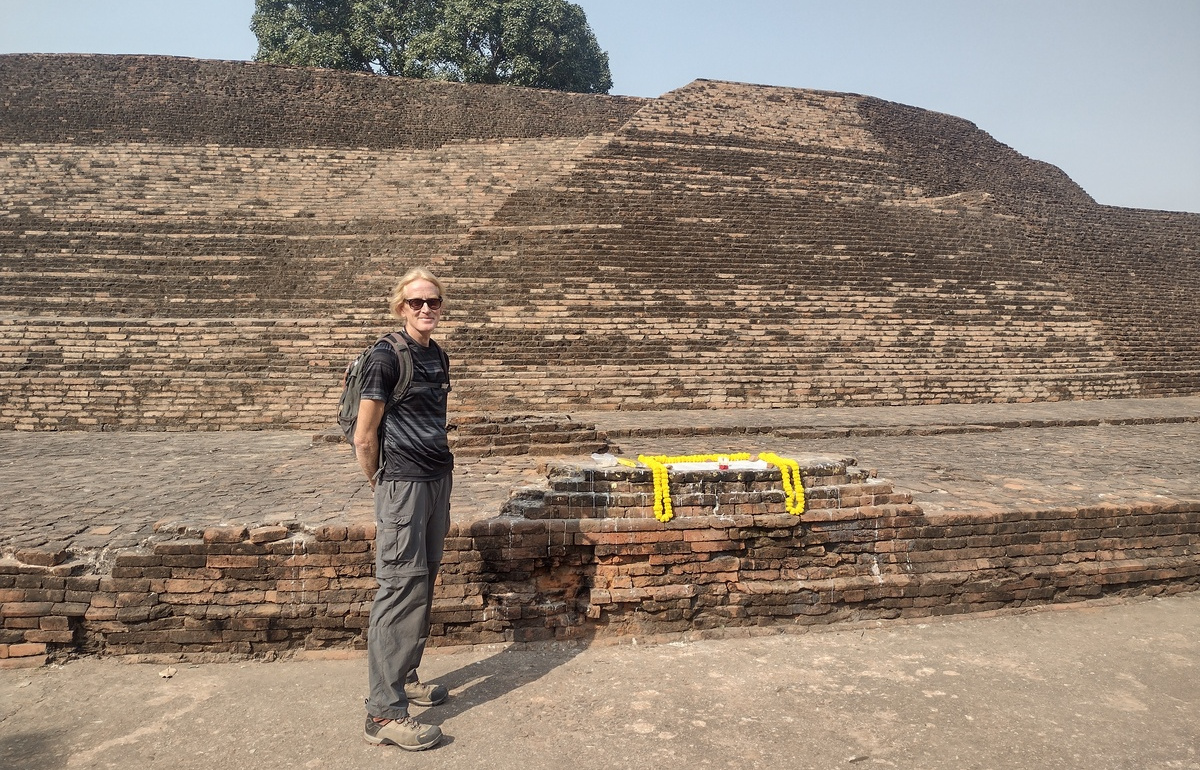 So I walked down to the Phalgu (Niranjana) River and crossed the bridge to view the Sujata Stupa, which is the site where the young woman, Sujata, gave the emaciated sage (who she may have thought to be the spirit of a tree she had been praying to) a bowl of purified rice pudding. Eating this kheer, which is a symbolic act of all the buddhas, marks a renunciation of the ascetic path in favor of a path of moderation – the Middle Path, as the Buddha called it.
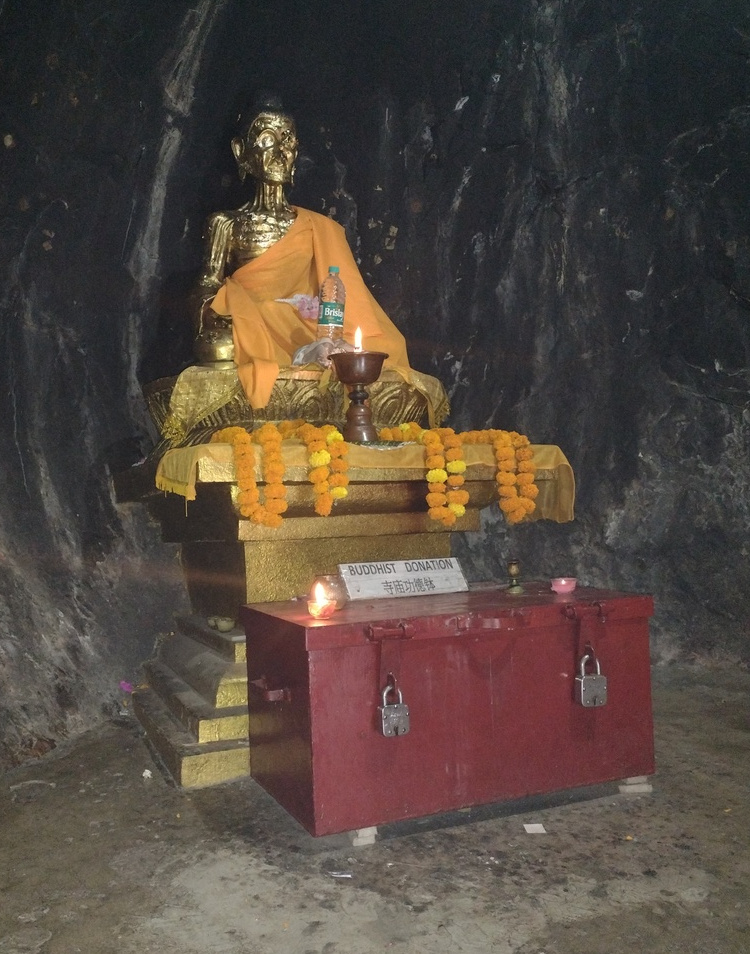 The cave itself – also known as the Mahakala Cave – is up on the side of a small mountain range that rises up out of the otherwise flat terrain. There is a pathway up to it, which is lined with people begging or selling packets of biscuits you can feed to monkeys, along with incense and souvenirs of the trip.
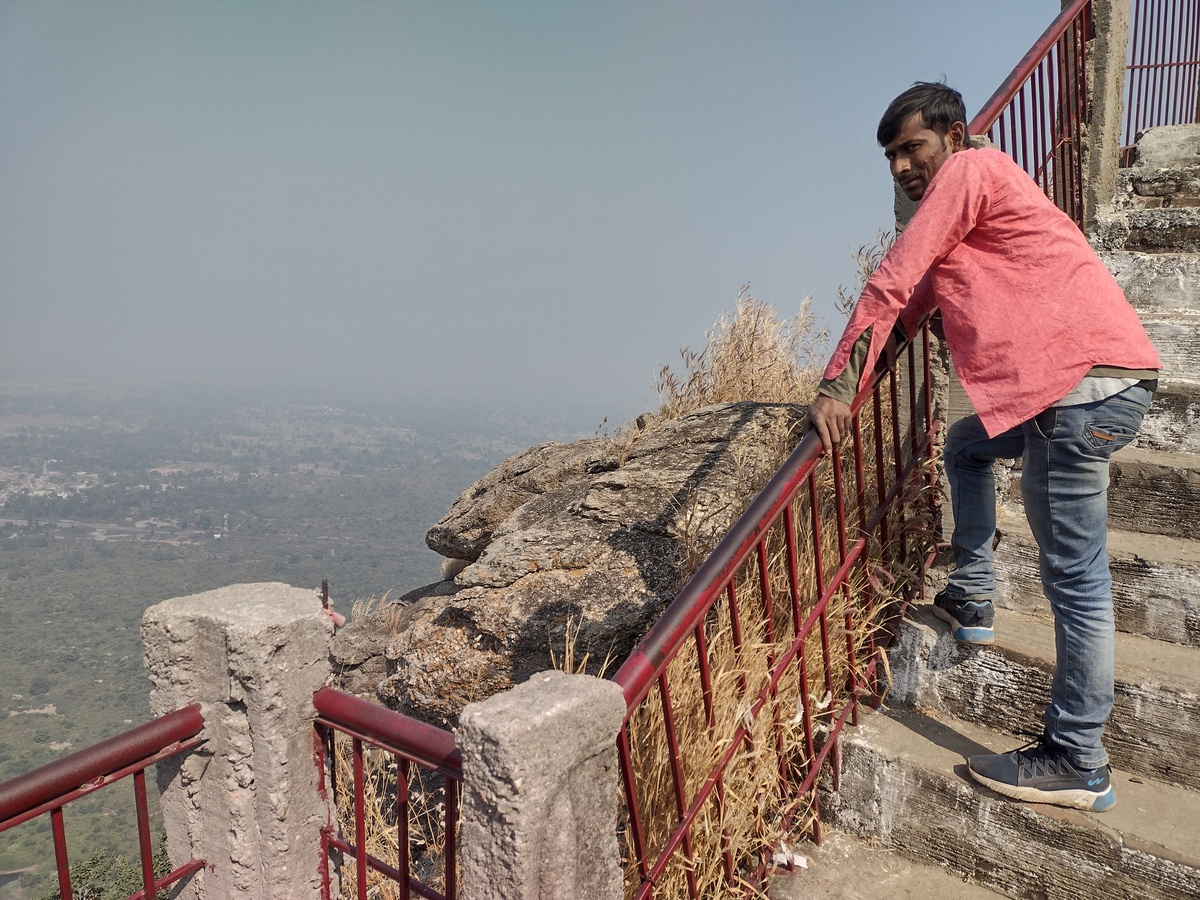 Regardless, the driver (whose Indian name I could not commit to memory) and I climbed the nearly 1,700 steps from the village at the base all the way to the top. The only people we saw during the entire trip were a few impoverished villagers and Annie’s group from the Root Institute that I knew were also hiking there that day.
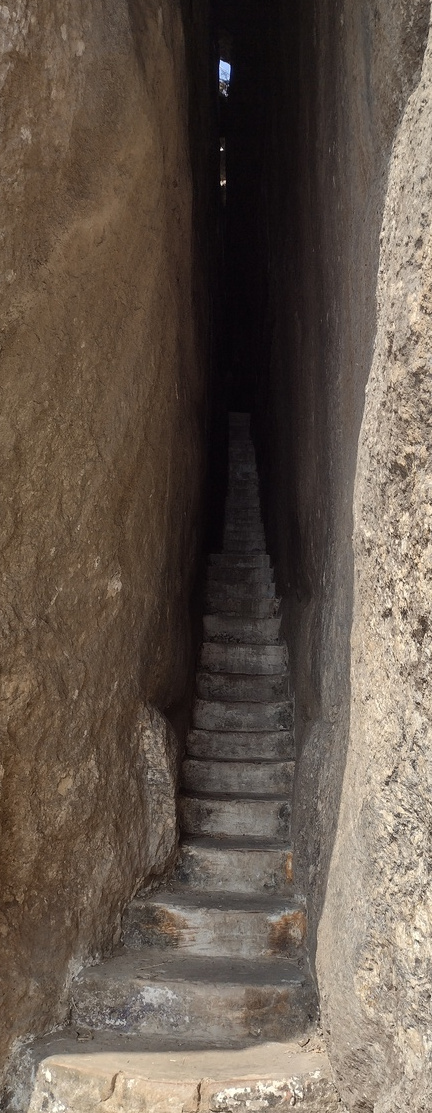 I’m not really sure if this site, also known as Kukkutapada or Gurupadaka, is actually a placed visited by the Buddha, but one of his most revered disciples, Mahakashyapa, was swallowed by the mountain and still waits in meditation for the future Buddha, Maitreya, to arrive in the world so he can present him with Shakyamuni’s robe.
 We met for the first time on the bus to Dharamshala and spent that first day exploring the Dalai Lama’s temple together. Like me he is in recovery from alcohol and drug abuse and we had the opportunity to celebrate his four year anniversary with a slice of cake while we were in Bodh Gaya (which reminds me that today is my own nine-year anniversary).