“You ain’t gotta go home, but you can’t stay here.”
 Those barroom closing calls that I heard all too often back in my drinking days echoed through my head during the final few weeks I spent in India.
I probably could have lingered around a while longer but I knew I had soaked up enough of the culture for this trip. But more pressingly, the 180-day validity of my visa was drawing rapidly to a close. I either had to leave or do what is called a visa run – a short trip out of the country before coming back.
So in planning my next steps, I asked myself what did I want to do that I had not accomplished to date. The answer was Vipassana, which is a type of Buddhist meditation retreat. But India does not have a monopoly on Vipassana. While it is offered in many of the Buddhist monastery communities I visited earlier in my trip, India is not officially a Buddhist country.
So why not do this in an actual Buddhist country? My Kiwi friend Benjamin introduced me to the concept when we first met in Dharamshala back in September and he had done his in Thailand. I found an international Vipassana center called Wat Phra That Si Chomtong, near Chiang Mai, Thailand, and signed up to arrive in mid-May.
And here we are. In a Chinese hostel in southeast Asia, getting ready for 10 days alone with our thoughts. No cell phones or computer blogs, no books or journals, no yoga classes, no coffee or cafes, no talking or socializing with fellow participants, no eating past noon, no napping during the day.
Just 16 hours a day of sitting and walking meditation on the grounds of a Thai Buddhist temple, two modest meals a day and the daily lesson and meetings with meditations coaches.
At least that is what I understand of the rules for Vipassana.
But the first two weeks in Thailand, I set aside a bit of time to explore the cities of Bangkok and Chiang Mai.
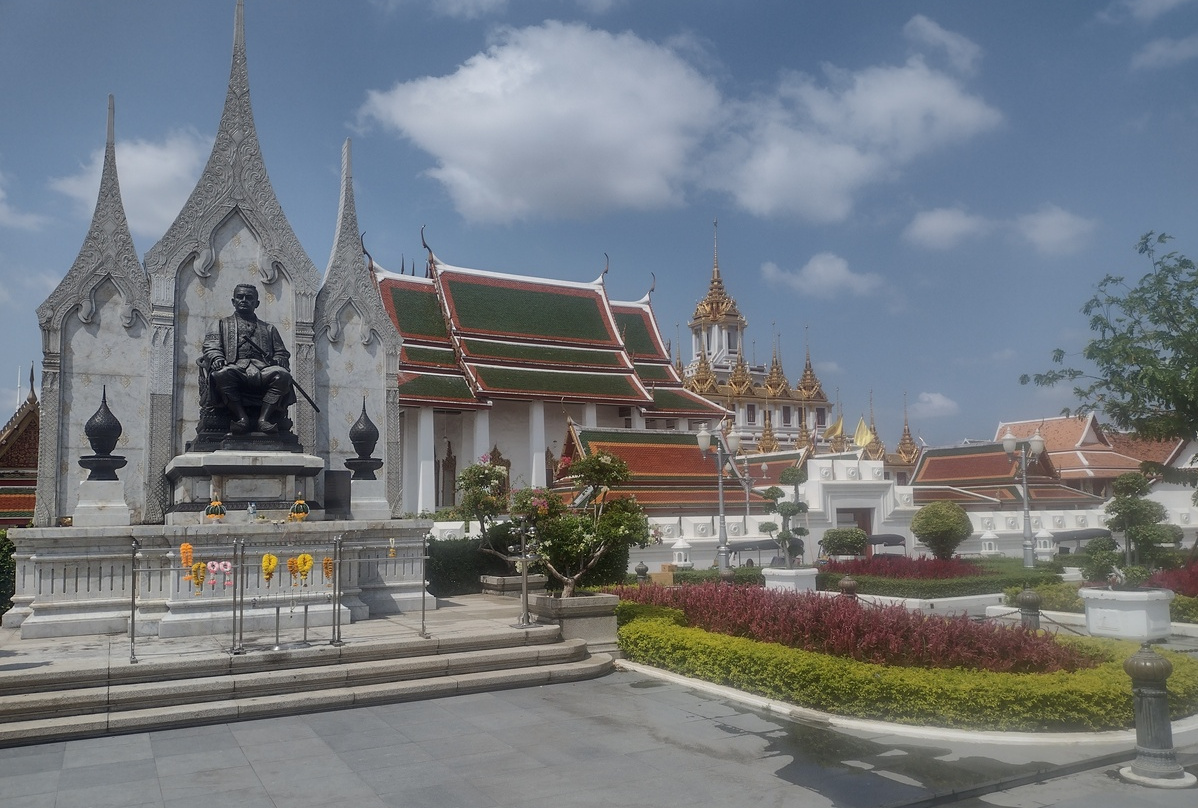
 The following day, I got my cash and set out to explore the capital city and found my way around almost entirely on foot or by using the efficient metro trains to get from place to place. There are also inexpensive private transportation services called Grab and Bolt, which are akin to Uber or Lyft in the U.S.
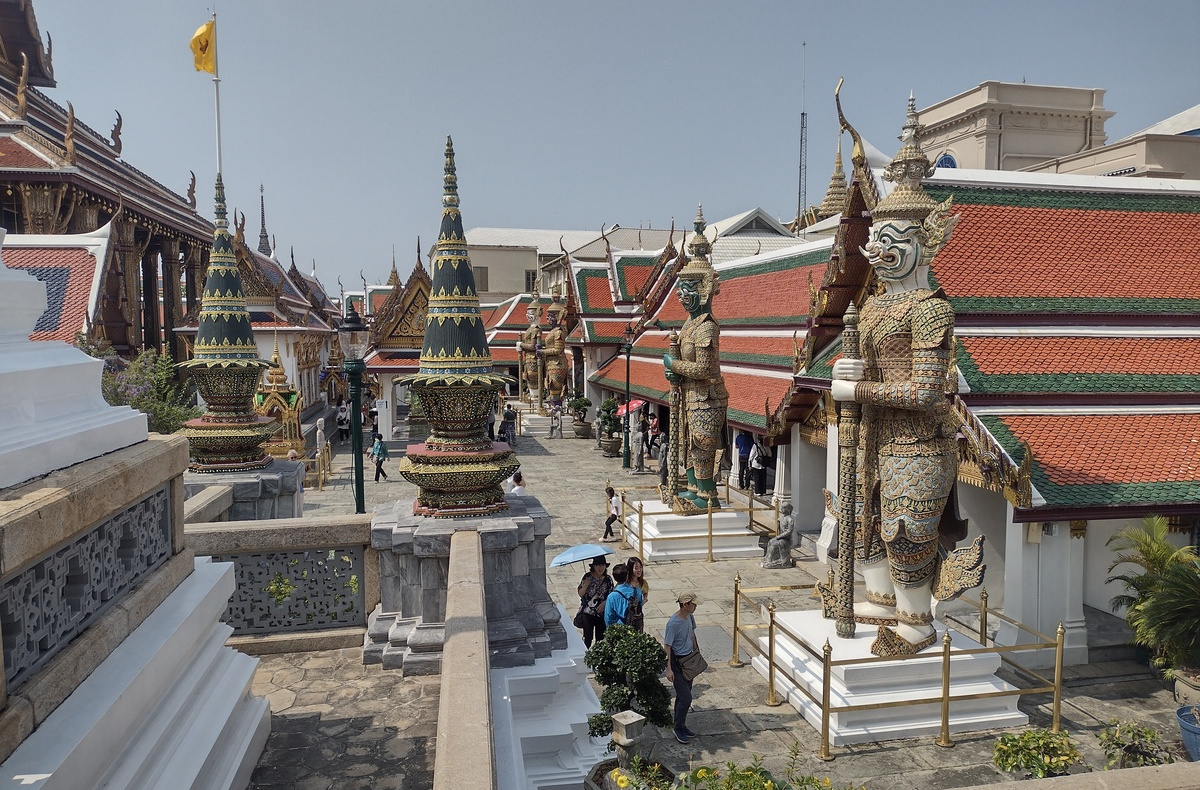
 Thailand is known for the many Buddhist temples that adorn its cities. Some are historic or house significant Buddha images while others are purely decorative, intended to draw in curious tourists.
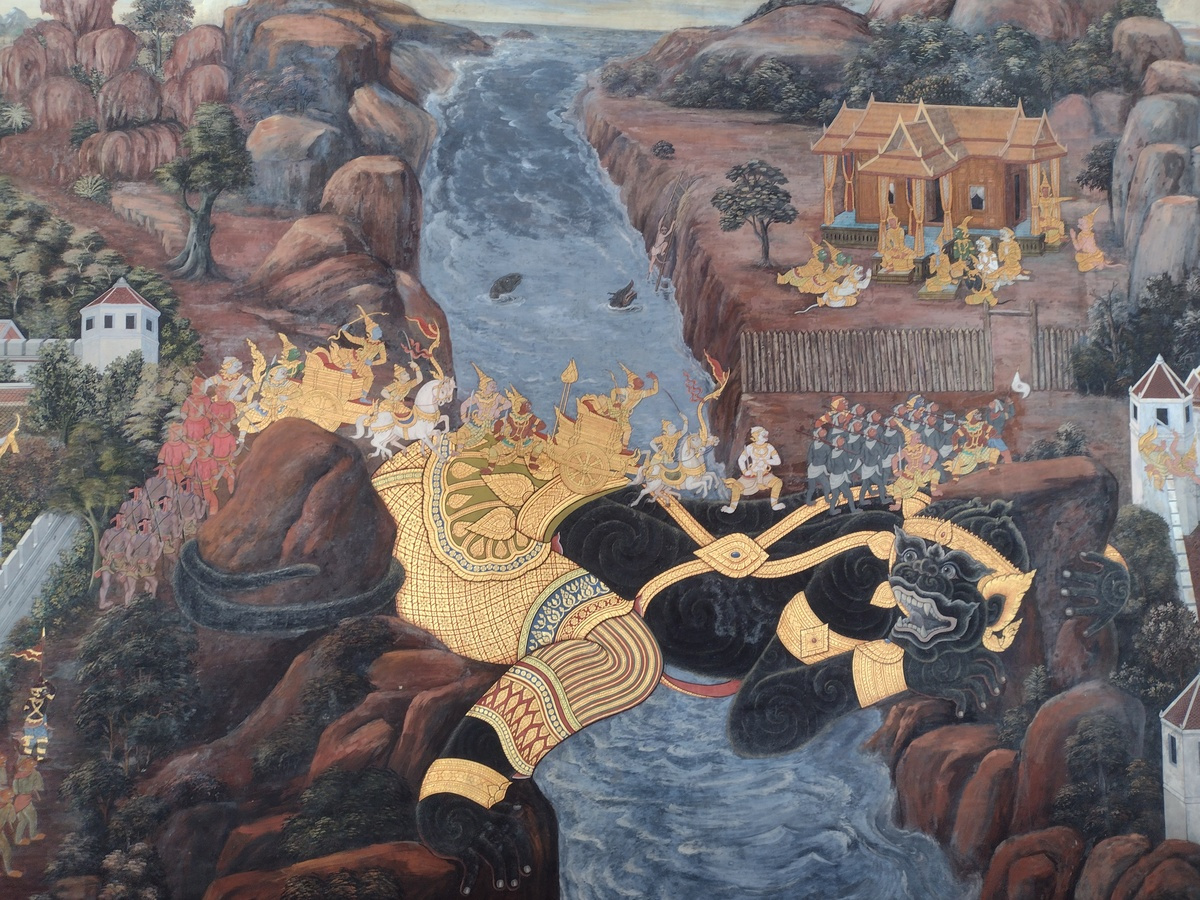 The entire outer wall of the temple is painted in murals depicting scenes from the Ramakien, which is a Thai version of the Hindu tale of the Ramayana. Later that day, I would also visit a theater for a sample of a Khon dance performance in which Hanuman – the monkey king hero of both versions of the tale – battled a sea nymph who was hampering construction of the bridge to Lanka.
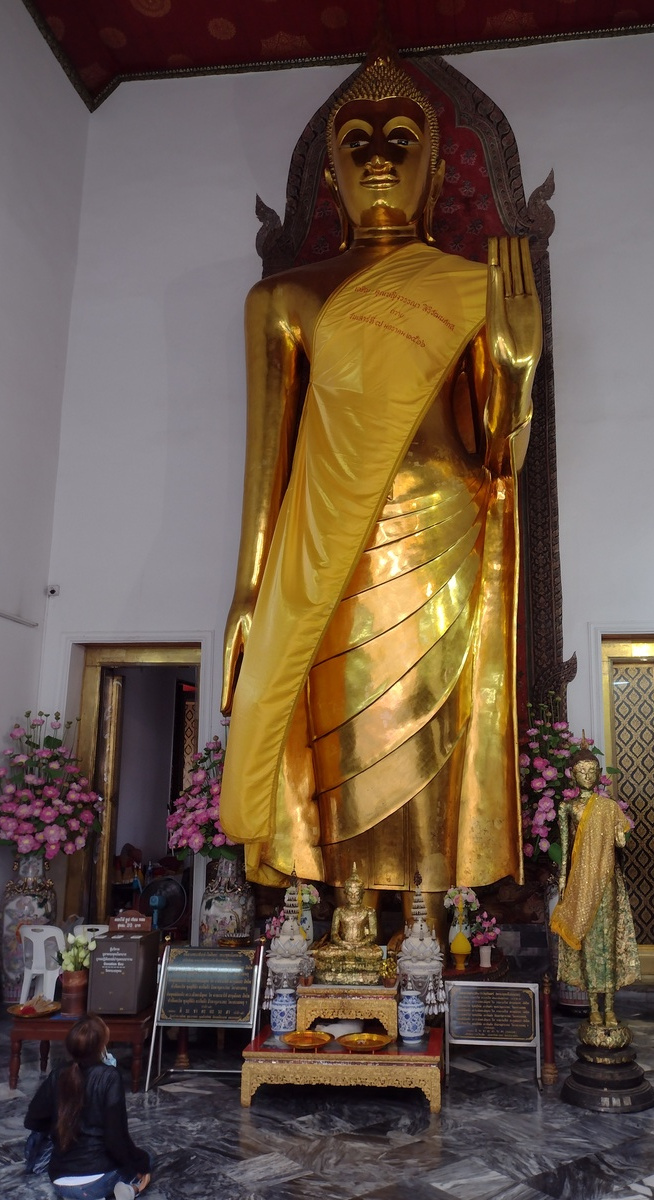
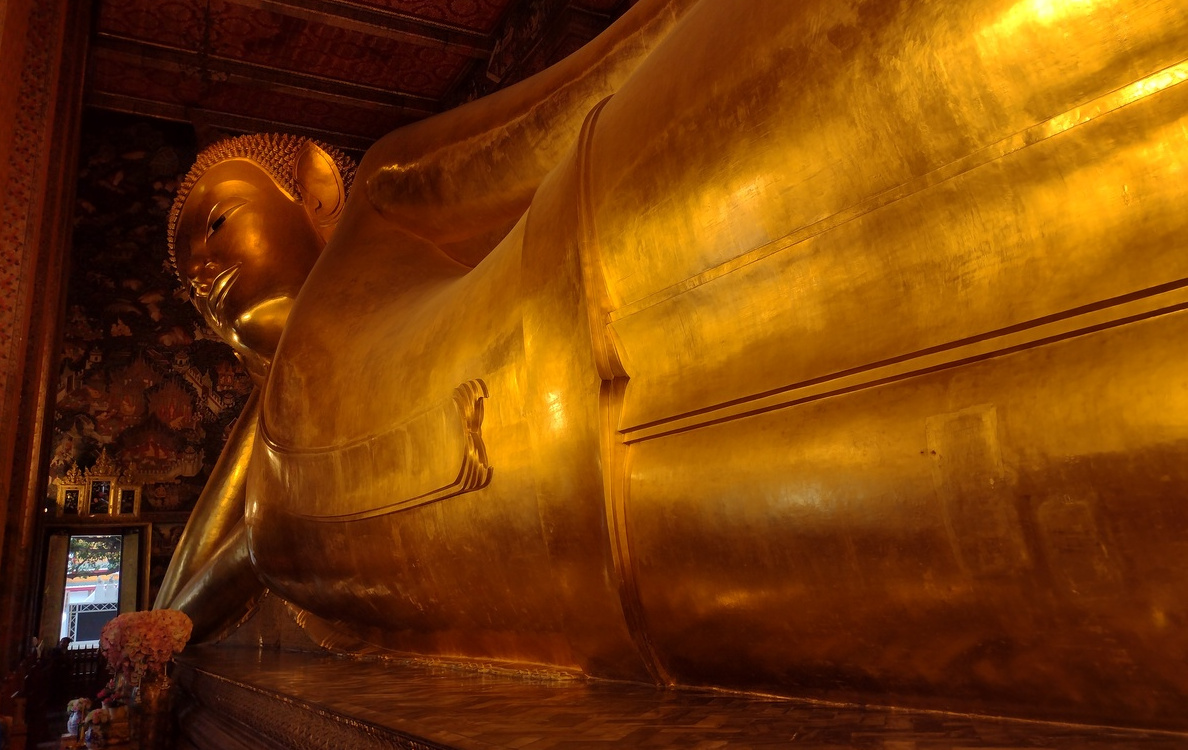 In addition to the palace grounds, there are several temples in the vicinity, including the Wat Pho temple, which is home to the world’s largest reclining Buddha statue and the War Arun, or the Temple of Dawn, which requires a short ferry ride across the canal to the west of the palace.
 The following day, I would also visit Wat Traimit, which is home of the world’s largest pure gold statue, weighing in at 5,500 kilograms and worth an estimated value of more than $250 million by today’s gold prices. While no one knows exactly when this massive gold statue was created, it survived conquests by invading armies only because it had been covered in a layer of plaster to hide its solid gold identity from the foreign looters. In addition to the statue and museum of its history, this temple sits on the northern edge of Bangkok’s Chinatown district and has a museum dedicated to the Chinese immigrants of the capital city.
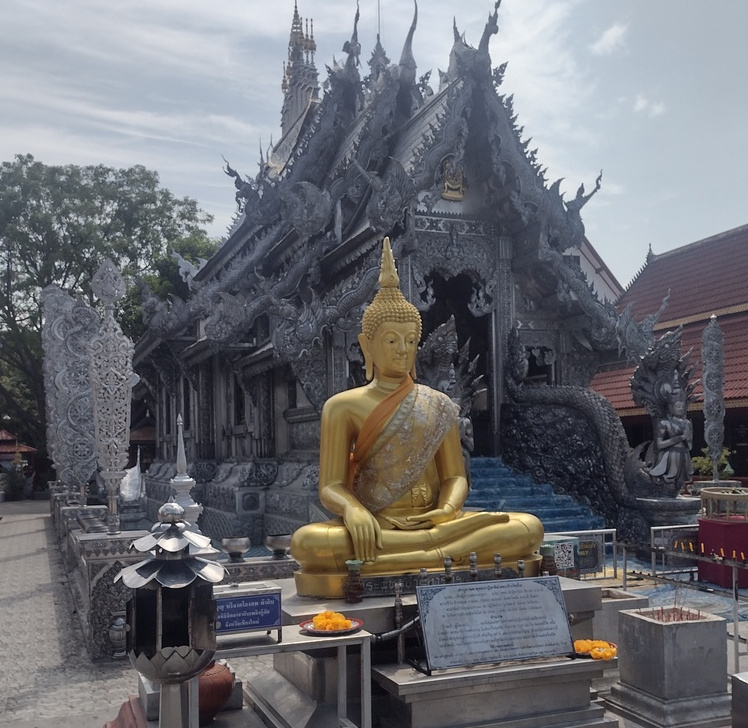 In Chiang Mai, I visited several temples, mainly those around where I was staying. After seeing four or five similar temples, though, they all start to blend together. One unique temple here is the Silver Temple, which as the name suggests, is all silver but inside, there are pictures of UFOs etched on the floors and one engraved door panel shows a deity of some sort with an electric guitar. There is also a large and old wooden temple.
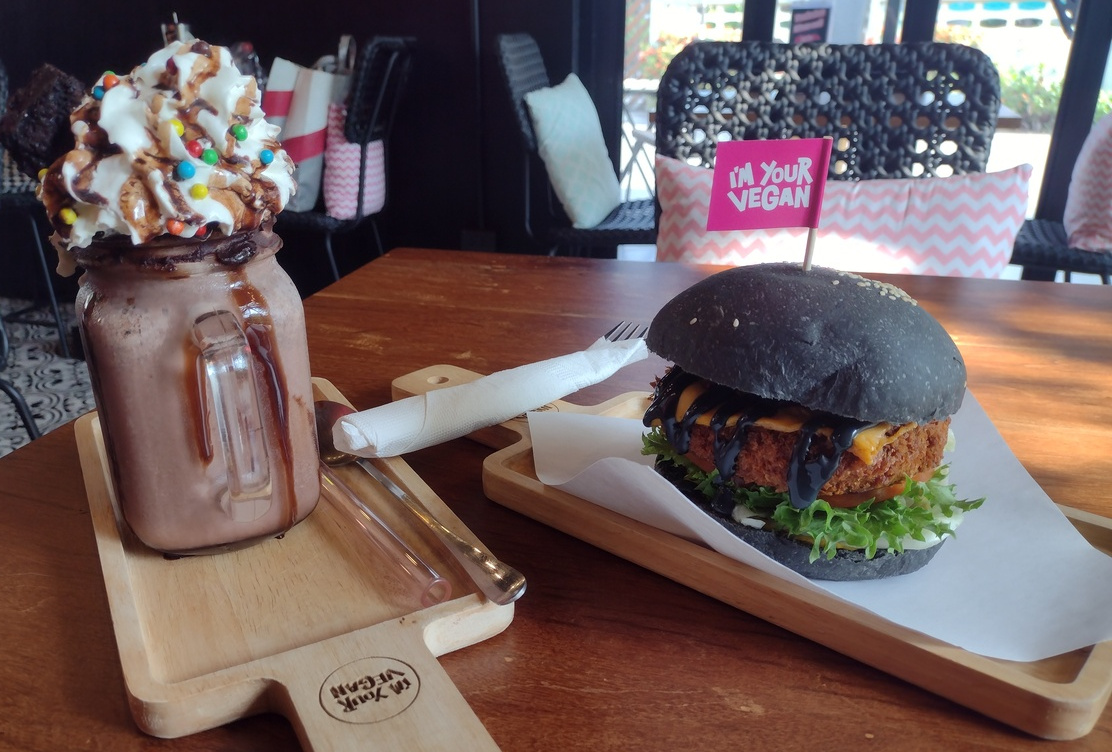 Even without the language barrier, finding vegetarian options at Thai restaurants can be even more challenging than it is in the United States. And street food almost always features some kind or meat or seafood.
 And that brings me to coffee, which is ubiquitous in Thailand. For as popular as tea was in India, coffee is equally popular here. It is everywhere, and of course, I have been indulging, probably too much. And of course this only adds to the pitta imbalance issue.
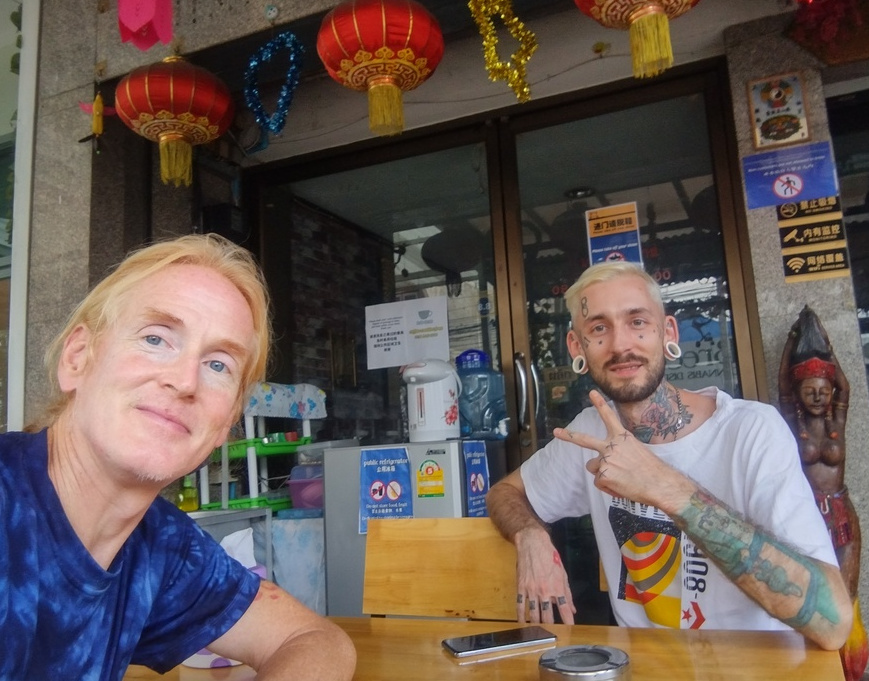 It probably doesn’t help that my only friend here, Andreu, a Russian who is the only other current denizen of this Chinese hostel, is a huge coffee lover too.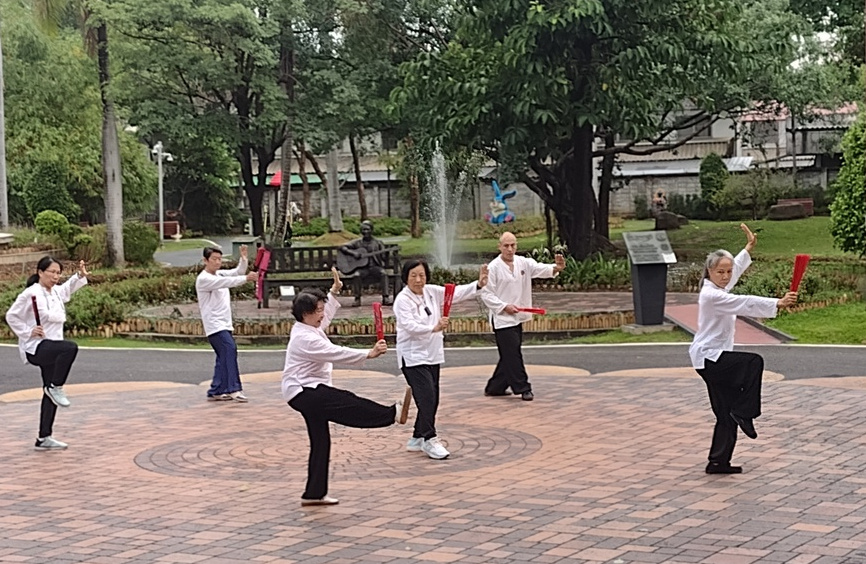
 I found a nice recovery club in the heart of Bangkok that has a meeting every day at noon and in Chiang Mai, the park where I have been doing my morning meditations has a 9 a.m. meeting six days a week and there is a 12 Step Room about two kilometers from my hostel with noon and 6 p.m. meetings basically every day of the week.
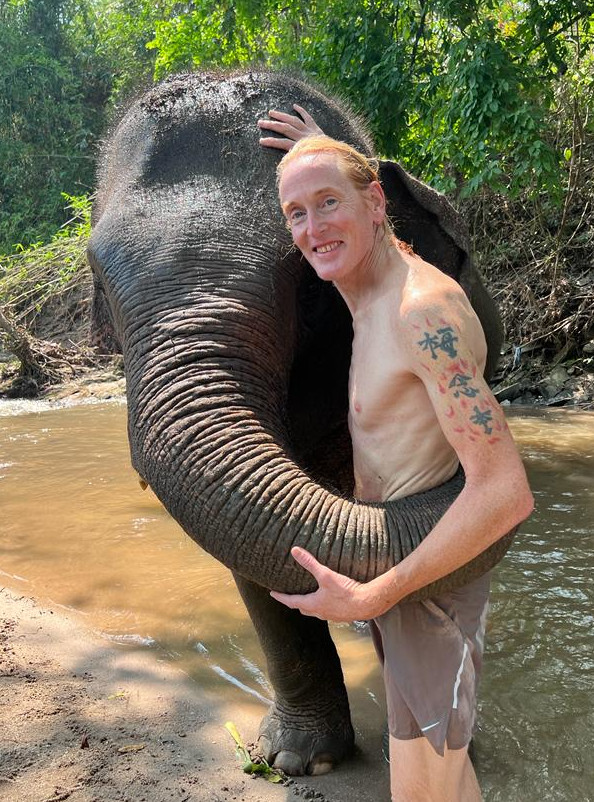 During that trip, we got to prepare a vitamin ball, which we fed to the group of five elephants, which were brought in by the group of local men who cared for them. The family included three generations of elephants, including a 45-year-old grandmother, a mother of about 25 years and the youngest was a 6-year-old female.