Jetavana: The Buddha's Home
The following morning, I made my way directly to the Jetavana site, which was already abuzz with activity by the time I arrived. There were a couple of groups of southeast Asian tourists, an Indian boys academy and numerous monks who apparently live in the nearby monasteries. There actually appeared to be far more monks here than I saw in Lumbini.
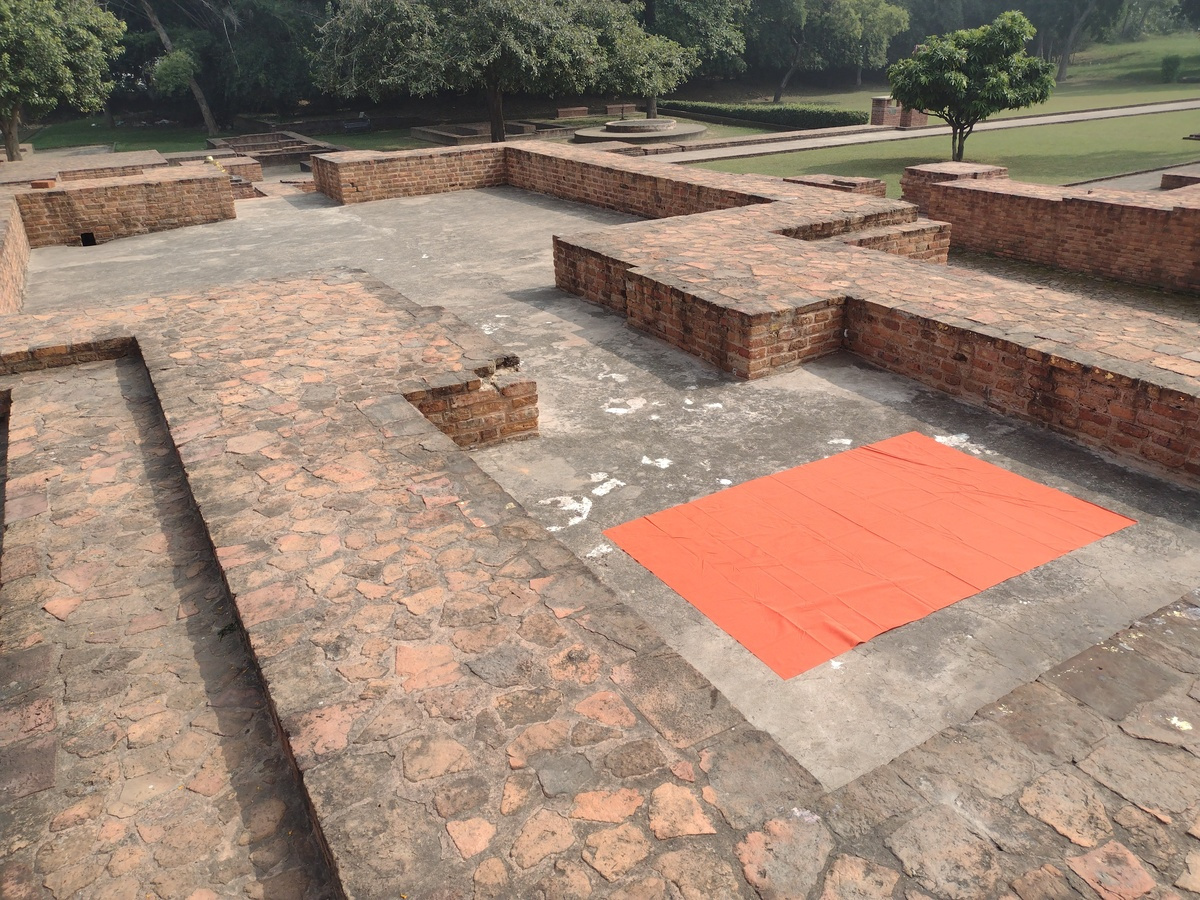 I started to make my way around to the various sites. Near the very start of the tour is the place where the Buddha spent at least 24 or 25 monsoon seasons. Apparently, at that time, monks were only allowed to spend more than one or two nights at the same location during the monsoon and Shravasti was the Shakyamuni Buddha’s go-to place for the rainy season.
One thing I was not expecting, in India, you can climb all over these archaeological remains. In fact, they are well-maintained and it is clear that they have been liberally supplemented with modern brickwork as needed. Crews work daily to scrub the brickwork clean at the site.
So, I saw other people up by the Buddha’s living room and took a seat near that location for meditation. It was quite a feeling to be sitting and meditating so close to the exact spot where the Buddha himself spent many hours in quiet solitude. It was good to be able to sit without distraction for a few minutes under the warm morning sun and soak in this feeling.
As soon as I came down though, the students from the boy’s academy were wanting to take dozens of selfies. A local monk must have taken pity on me, because he helped me get away from all that noise and showed me the spot where the Buddha did much of his teaching and the well from which he drank.
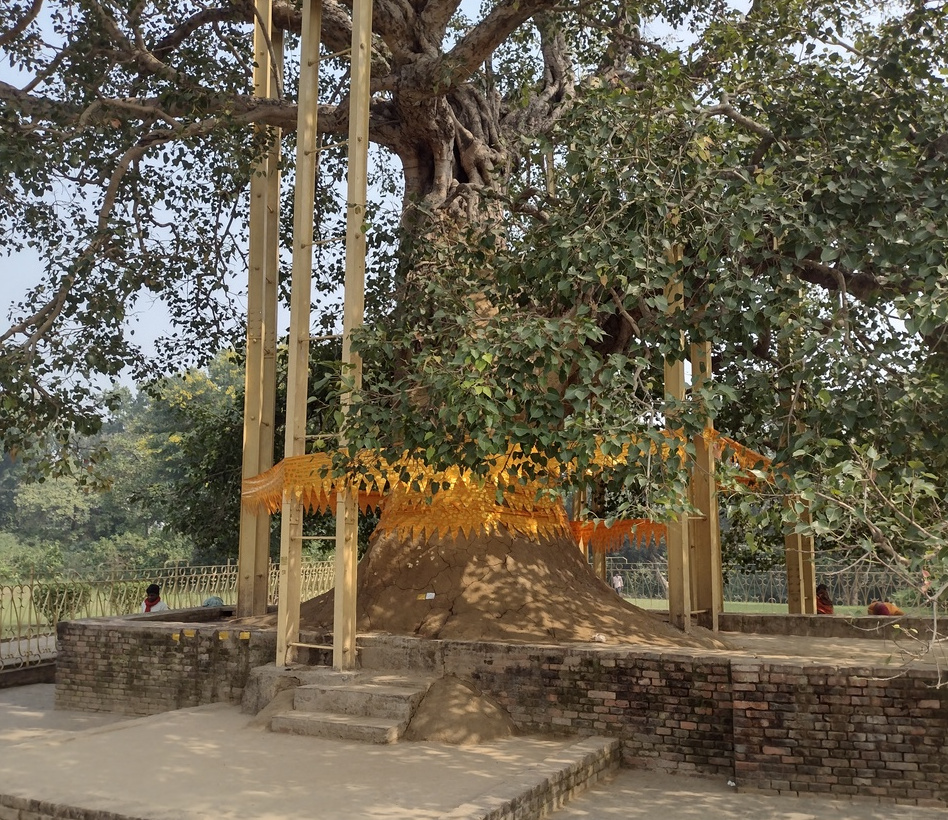 Next up was the bodhi tree, which is believed to have been planted from a seed that fell from the same bodhi tree in Bodh Gaya where the Buddha achieved enlightenment. If it is truly the same tree, it could quite possibly be the oldest known tree on the planet.
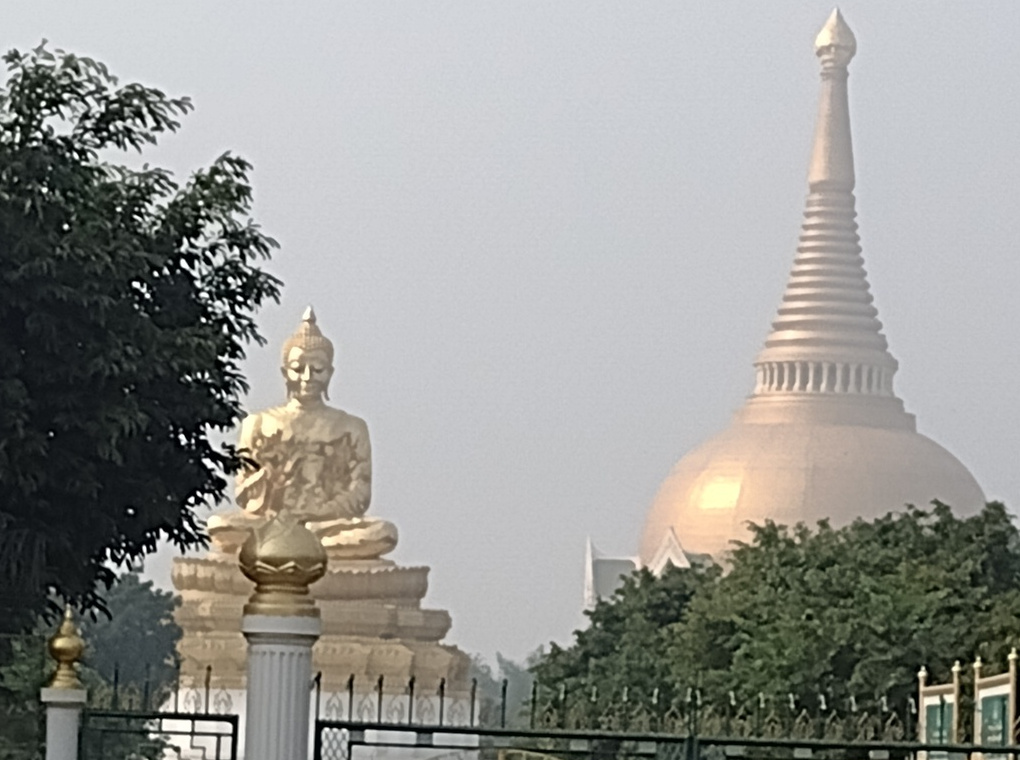
The site also includes a number of other stupas and remains of monastic residences, along with a site called Mahastupa that is still being brought up to the same condition as the rest of this site. Behind this area, I found a spot where the view of the golden Buddha statue is better than the view from the fence and let my eyes fall shut for a short nap in the grass.
When I awoke and went back to the main area, I discovered that nearly all the crowds had left for lunch and the one remaining tour group was making its way back toward the gate. I essentially had the site to myself.
I went back to the bodhi tree for a bit, but the scrubbers, who were taking their own lunch hour, were making a fuss over some monkeys who were about the site -- more trouble, it seemed, than the monkeys themselves were making. So I returned to the Buddha’s hut and sat some more in silence until people started to make their way back to the park.
I posed for one more round or selfies before showing myself out of the park.
 Once I made it through this process, I got on a local bus from Sonauli to Nautanwa, where I had heard a local train could take me onward toward Shravasti. I found the train station and there was a train leaving soon but I opted to stay in Nautanwa and try to get a SIM card first.
 This turned into a big hassle and I ended up spending two days in Nautanwa and doing a day trip to the bigger city of Gorakphur but eventually I was able to get the SIM card, pick up some India rupees that I had sent to myself via Remitly (which for fellow travelers is a whole lot cheaper way to send money than using ATMs) and mail off a package to the U.S., despite the fact that my second day there was a holiday and both the banks and the post offices were closed that day.
 The site, however, is much the same. There are several stupas and historic parts of the ancient city, which competes with Nepal’s Kapilavastu for the title of being the home of Siddhartha Gautama and the capital city of the Shakya clan that ruled the region, and of which Siddhartha was a prince.
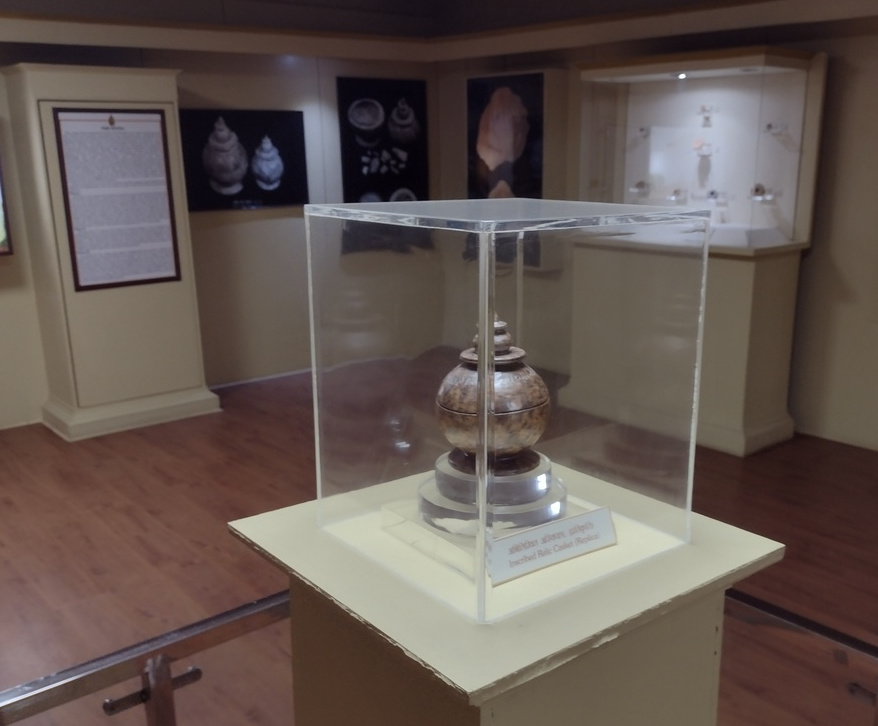 The primary claim this site has to being the “real Kapilavastu” is that the primary stupa (or a temple built over a burial site – much like the Egyptian pyramids) was opened by William Claxton Peppe, a British regional colonial ruler in 1898, had the stupa opened and it revealed a variety of artifacts and cremated human remains. The seals of the tomb date back to the 5th or 6th Century BCE and the inscription indicates the descendants of the Buddha sealed his remains there. Or at least a part of them. The Buddha’s remains were actually divided and distributed to eight different clans at the time.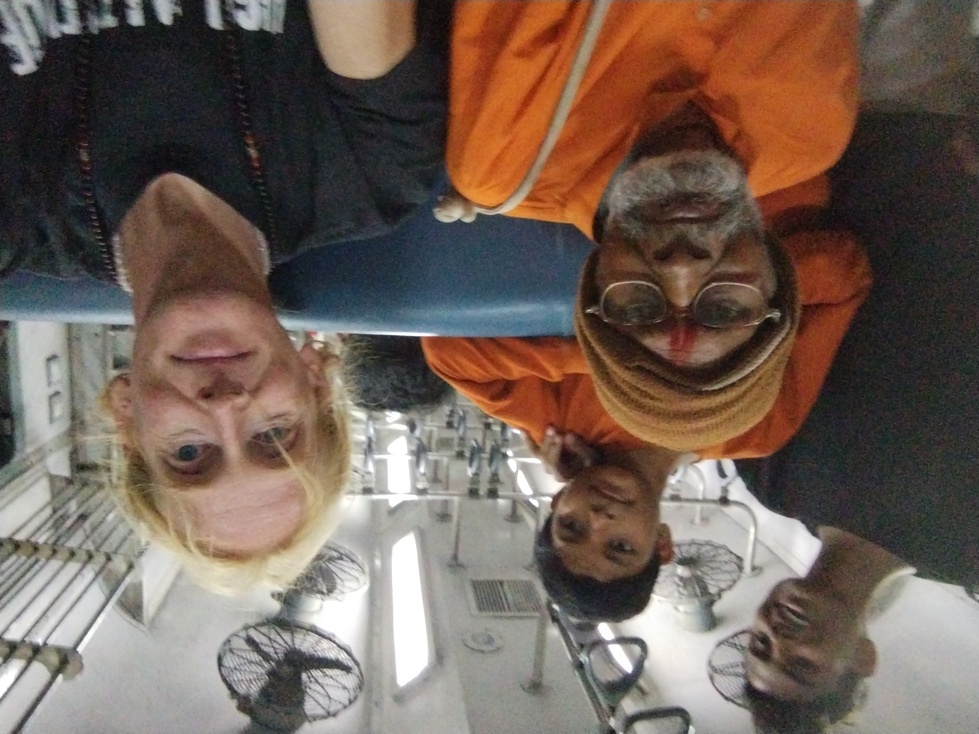
 This was my chance to stay in a monastery since I opted not to do that in Lumbini, and it proved to be a pleasant environment although it was much like a hotel with large busloads of tourists arriving in the evenings and departing in the mornings. I had a walkway with a railing overlooking a central courtyard, along with a clothesline that gave me a perfect opportunity to catch up on my laundry without taking it to a service.
 Instead, I went north toward some ruins called Mahet, which includes an ancient Jain temple, the site of the small town and a stupa built over the jail where a highwayman turned devout disciple of the Buddha named Angulimala (literally meaning “finger necklace”) served his time for robbery and cutting off the victims’ little fingers for his mala.