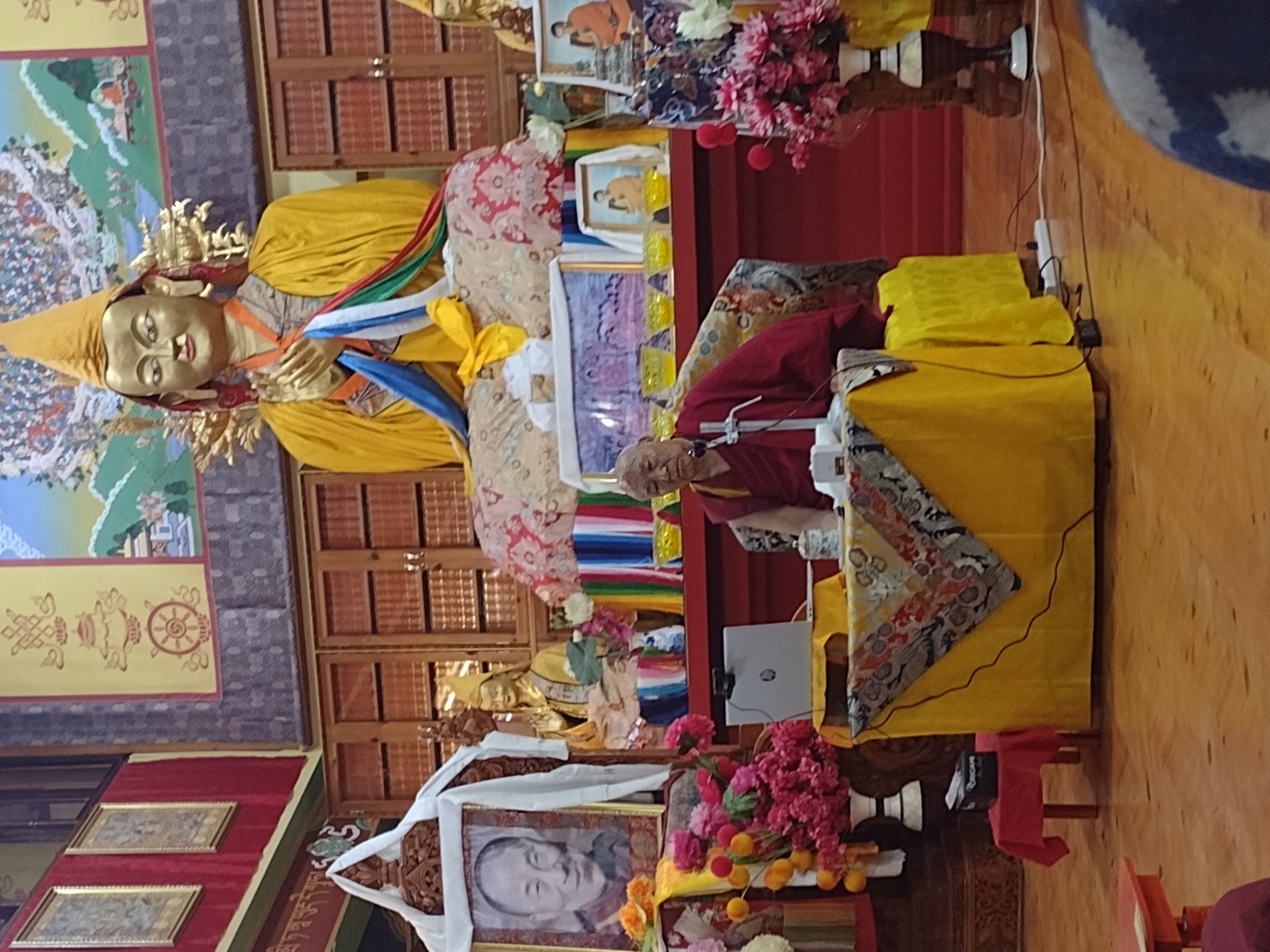
Teaching Compassion
He continued on to discuss the plight of the Tibetan people, who have been in exile since 1959, about 10 years after the Chinese Communist government invaded and took control of the Himalayan nation.
While his own escape and life in exile has been a challenge, he siad it has also been “a blessing in disguise” as it has allowed him to spread the teachings of the Buddha far and wide.
The lesson also touched on the importance of spreading mindfulness and compassion as a secular teaching in schools worldwide to help eliminate the negativity that comes with materialistic thinking.
“It is not a religious matter at all,” he said. “If you are loving and compassionate, you will be at ease with yourself. When there is discord among groups, people take up weapons. This has to stop.
“It is through the practice of generosity, such a person would be able to cut through the tensions between beings and enter into a state of peace. Giving to beggars and donating to education, as a result he will journey toward a state of peace. The bodhisattva takes joy in giving at all times.
“The bodhisattva sees pain as something undesirable to themselves. They see the pain of others and the pain of beings of the animal realm as undesirable to themselves. This is the moon that shines a light and dispels the darkness,” His Holiness said, quoting from Nagarjuna.
He concluded the initial day of teaching with an introduction to the “Generation of the All Encompassing Yoga Mind Meditation” which he practices multiple times throughout the day.
The technique involves visualizing a white disc at the heart center with a five-pointed vajra and focusing on bohcitta.
“If you think not only of yourself whereas seeing all other sentient beings are the same as yourself, not wanting even the slightest suffering but wanting perfect joy.
“The bodhisattva sees as clearly as a berry on his palm and uses the two wings of conventional and ultimate truth to cross the sea of samsara like the king of swans.”