The Benefits of Props
While I was at the workshop, I bought a copy of Arun-ji’s book, “Experiment & Experience on the Chair the Yoga Way,” which is dedicated to the use of the yoga chair as a prop. The book features dozens of yoga poses, each with multiple variations and illustrated with photographs.
In the book, Arun-ji describes the use of props as follows:
“An Asana is not about sitting in any comfortable pose, and props are not used to increase our comfort as many seem to assume. They not only help us to keep our body properly aligned while practicing an Asana but also to understand the basic concept of Sthira Sukham Asanam.”
Sthira Sukham Asanam is a term used by Sage Patanjali in the Yoga Sutras (II:46) that roughly translates to “steady comfortable posture.” The Sanskrit work sukham, or sukkha, can also be translated as bliss or happiness and is opposite to dukkha, which is pain or suffering. This is probably the foremost lesson I have learned while practicing yoga in India. The goal is not to look good in photos but to be firmly rooted within oneself and comfortable enough that the outside world melts into the inner world and the practitioner begins to experience true inner bliss.
So, getting back to the topic at hand, Arun-ji continues on to explain the benefits of props as follows:
“There are several other reasons why props are used. It is said that energy leaks from the body through some of the extremities, such as the toes and fingers. Moreover, about 80% of our Prana is leaked through our eyes. So when we practice Asanas and draw in energy, we need to lock this energy by pressing the feet and the middle of the palm on a block, chair or the floor… When that is done, the energy flows upwards against gravity. If the Asanas are not practiced correctly this way, we may end up with injuries and pain.”
Another yoga teacher I was studying with in Bodh Gaya, a 77-year-old Australian named Annie, who has studied with Guruji BKS Iyengar and his children, also brought this concept up in class. She prompted me to close the gaps between my fingers in my Virabhadrasana (warrior poses) as well as Trikonasana (triangle) in order to avoid leaky prana.
As Arun-ji notes, that is also why we try to close our eyes during asanas, although that can be easier said than done in many cases.
During our classes, we did some challenging poses and I won’t say that the props made the poses easier, because they did not. Instead, they allowed me to find a sense of comfort and relaxation while deeper in the pose than I would be able to attain without the use of the props.
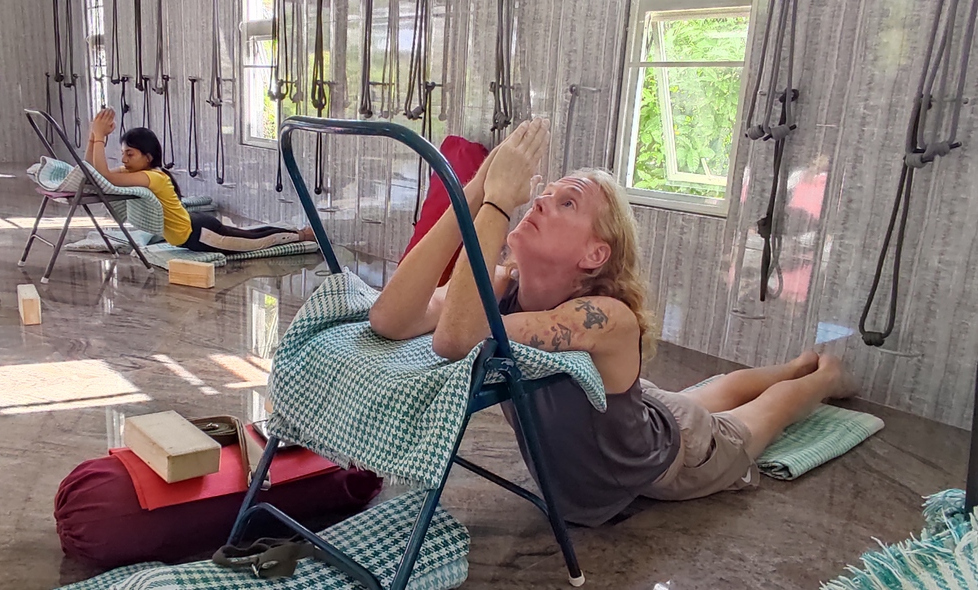
I’ve actually found myself working my way into some amazing back bends that I thought were far beyond my reach. And using the wall for support in headstand has taught me what it feels like to remain inverted for upwards of five minutes – how to keep a comfortable and steady breath and how to remove tension from the neck and back when it starts to sneak in.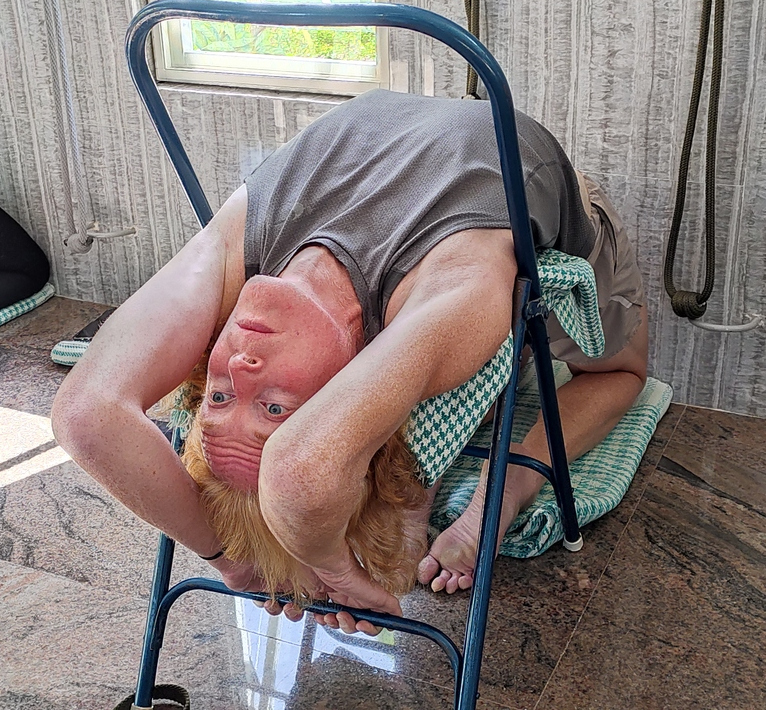
In the forward to the book, which was published shortly before B.K.S. Iyengar’s death, Guruji himself writes:
“Sri H.S. Arun has shown the role of props to not only maintain holistic health but also how the asana-s done with the help of props lead to full extension, expansion and good circulation as well as toward relaxation and natural reflection and meditation.”
All I can say is that if you have never really tried using props in your yoga practice or if you still have hang-ups about the props being shortcuts, put those misconceptions aside and give it a try. I think you will be pleased with the results.
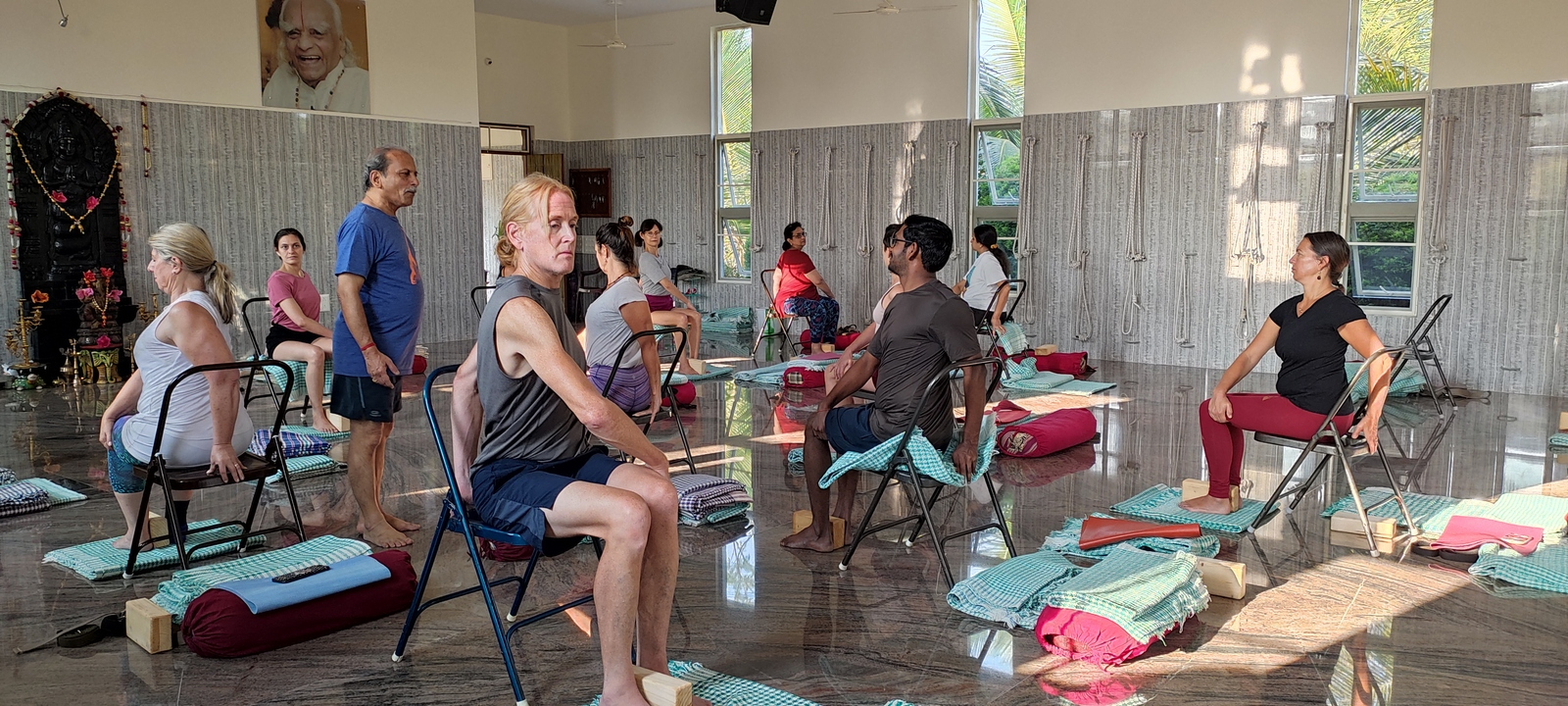
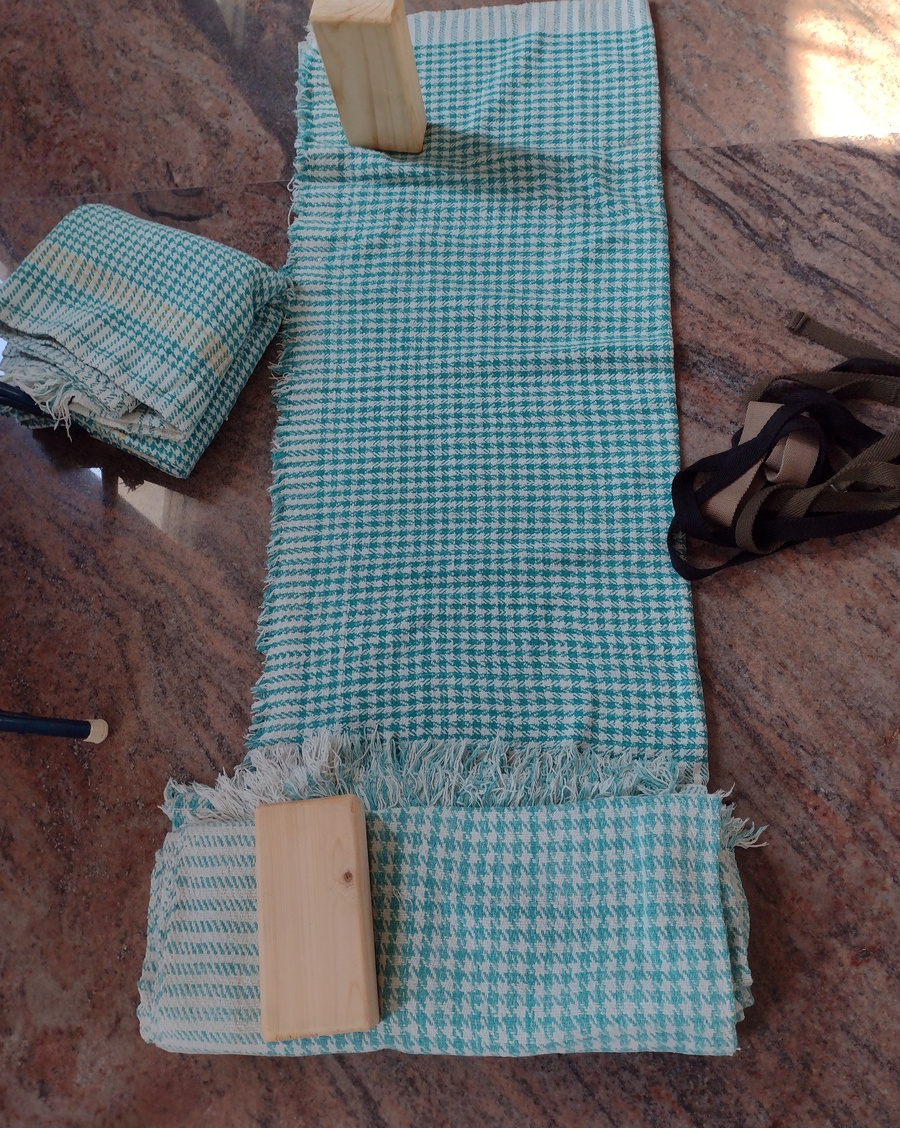 Instead, we had piles of five blankets each that we would arrange into various formations to support the body during practice. I remember when I first saw blankets in yoga classes, I thought they were mainly for people who wanted to stay warm in Sivasana. I now know they can be used for much more than comfort.
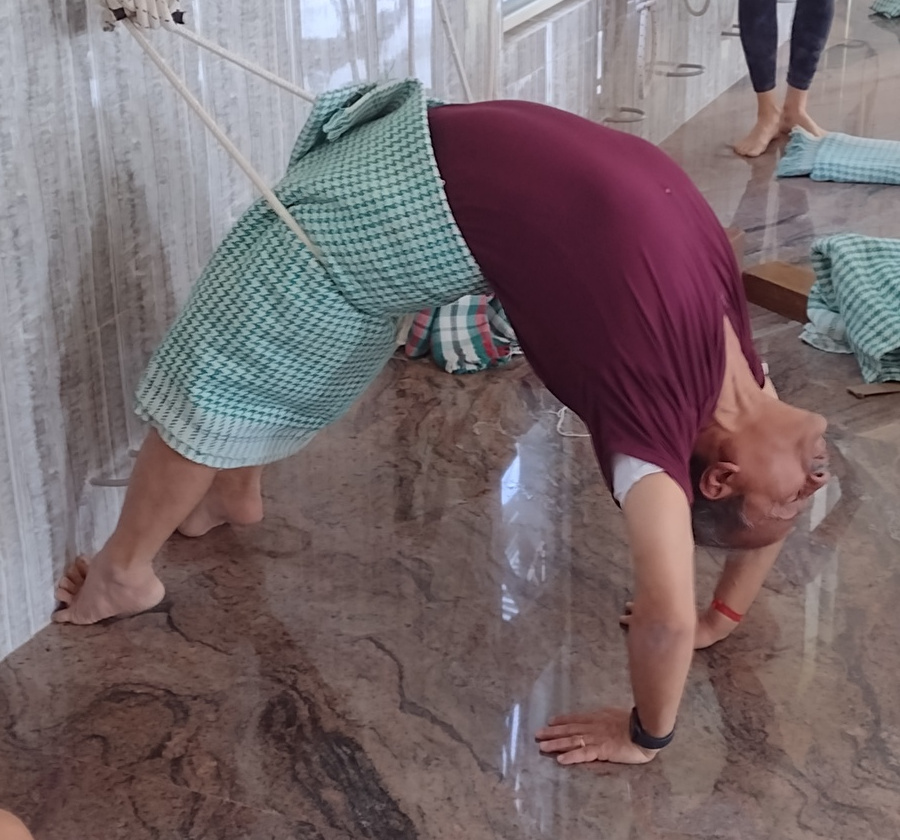 But Iyengar shalas also have one other unique set of props you can’t just buy on Amazon. Specifically, there are sets of ropes tied to metal hooks that are cemented into the walls. And even the walls themselves are props.
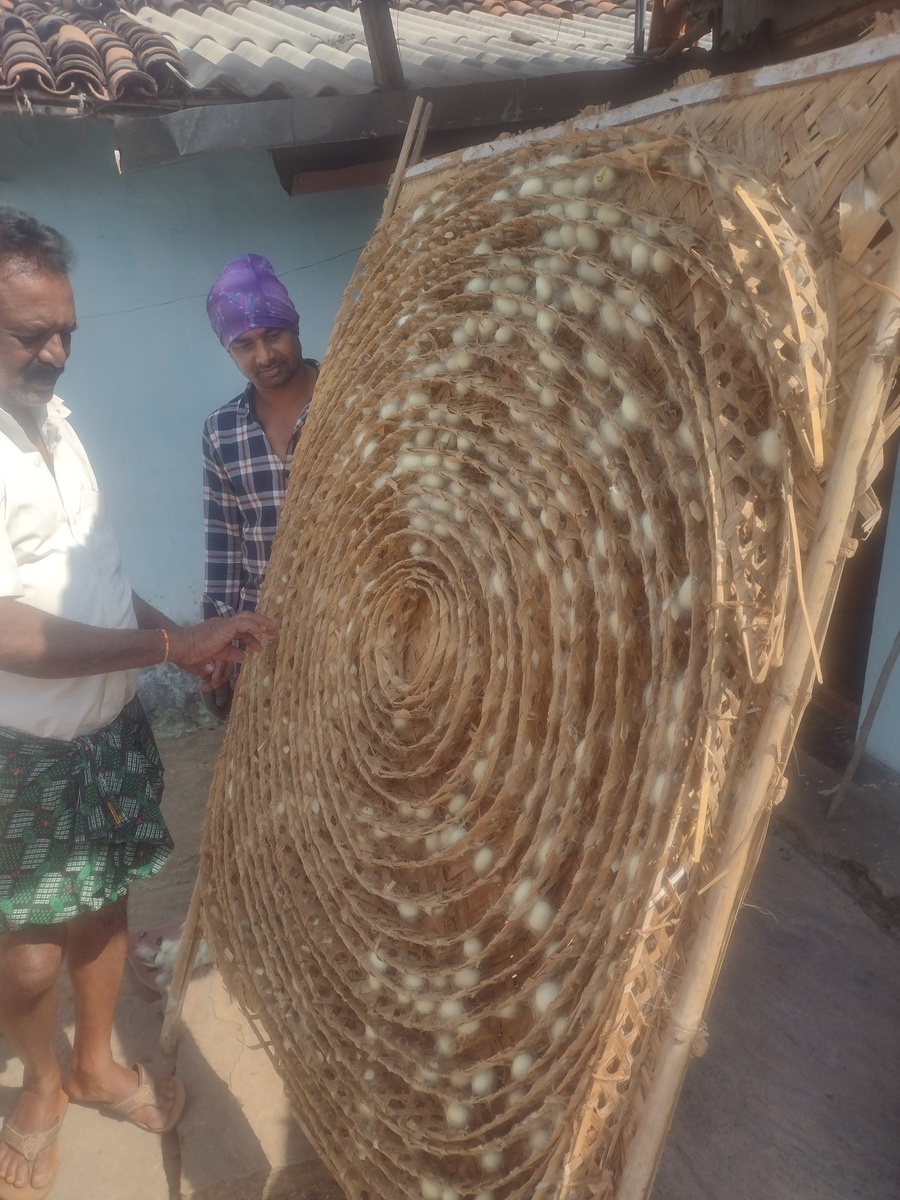 The workshop took place at a small village somewhere near Ramanagara, India, which is about 50 kilometers outside of the metropolis of Bangalore. The are was beautiful, but there was not much to do in the town other than yoga.
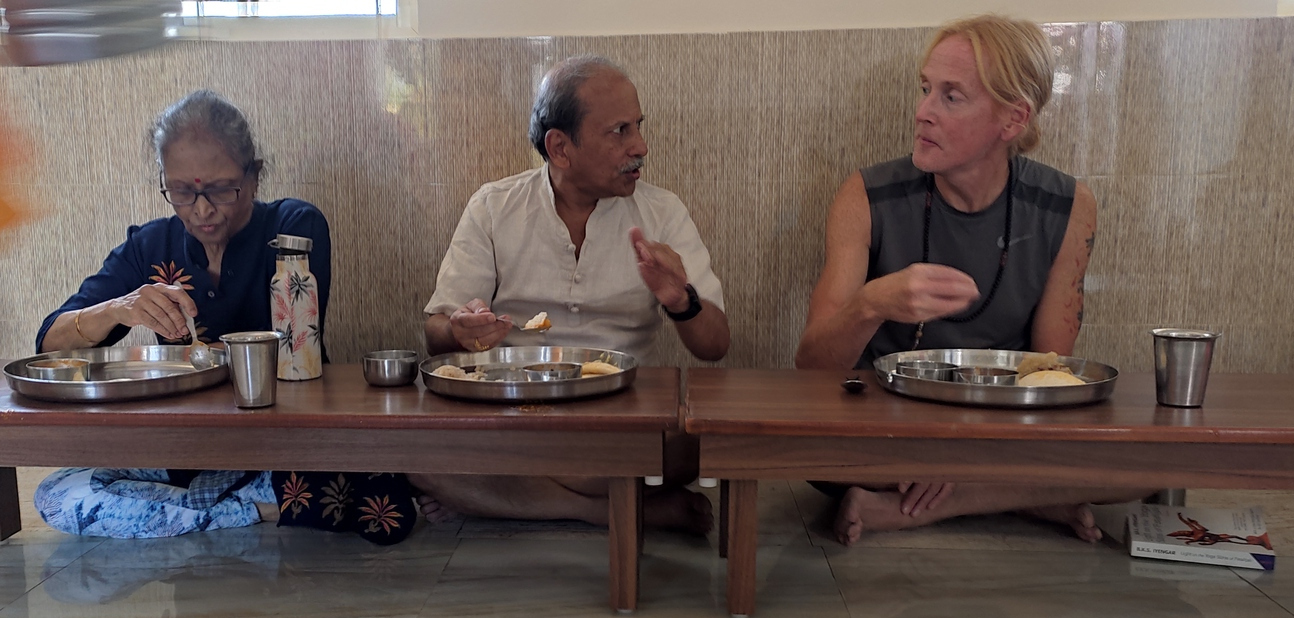
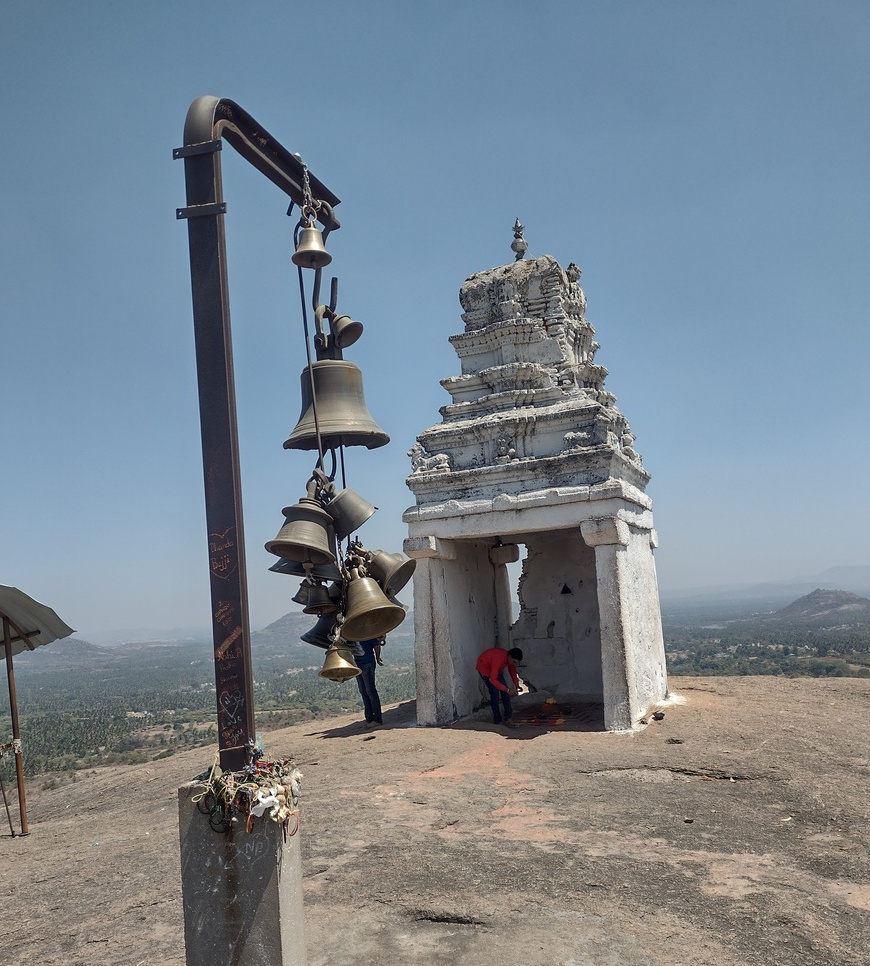 The hiker in me immediately said, “I want to go there.” So the following day, I did just that. The cooks who prepared our meals were leaving after brunch to go to the city for some supplies so they dropped me about two kilometers down the road and pointed me in the direction of the SRS Temple, as it is known.