When I left for India nine months ago, I barely knew what ayurveda was but I now see the benefits of including this ancient Indian health system into every aspect of my life.
During the yoga teacher training in Rishikesh in August, our anatomy class was actually a pretty comprehensive introduction to the holistic medical science. While that offered a taste, the past month at the Sivasoorya ayurvedic healing ashram has provided an in-depth experience of the diet, medicine and treatment methods.
The Doshas
My first introduction to ayurveda seemed to indicate that I am a vata type person, but two recent doctors say otherwise. Instead, they say, I am a kapha dosha, which is far afield from the way I see myself, in fact.
For those readers with little to no idea what all this means, I will try to explain to the best of my ability.
There are three doshas, vata, pitta and kapha. Vata is ruled by the elements of ether and air while pitta is controlled by fire water, and kapha is associated with water and earth.
Vata type people tend to be idealistic, heads in the clouds people, thin in build and somewhat flighty jacks-of-all-trades-but-masters-of-none. They travel and experience the world and love to see and learn new things. They are clumsy but have quick reflexes, catching things before they hit the ground. All these things describe me to a T; so I assumed I was a vata person.
Pitta people tend to be high energy, fired-up types who are charismatic and good at inspiring others and leading. They can also be quick tempered and easy to anger. And their body type is usually fit to muscular when healthy. I don’t usually associate these qualities as my strongest points.
Kapha people, on the other hand, are very content with life. They don’t usually seek to venture out but maintain a happy and healthy home life. They are very caring and compassionate toward others but don’t often express their feelings in words. Their body type is usually thick build and can lead to obesity when kapha is unhealthy. I guess I fit some of these qualities but I feel I have a lot to work on in the departments of empathy and compassion and my body type seems off the mark.
So when I got this diagnosis of having a kapha nature (or prakruti) it kind of baffled me. But as I study more what that means, I think I understand better.
This nature depends largely on parents’ doshas and I know both of my parents tend to be on the kapha side. I love the Meeses to pieces, but they are definitely homebodies and don’t adventure out much. I love it that my mom recently took up a ceramics course that gets her into a social environment outside of the home but other than shopping trips and the occasional road trip to Ohio’s Amish country, she rarely leaves the house any more.
And my dad could not be more content than watching football and enjoying a Sunday evening brunch and dinner.
They are both very loving and caring people although they don’t say it a lot in words. I wish I had inherited more of these traits from them, but apparently I got enough to be a kapha person.
Out of Whack
All this being said, regardless of what my dominant dosha is, it doesn’t change the fact that my vata and pitta doshas are way out of whack – or at least they were before my stay at Sivasoorya in Thrivanantapuram, Kerala.
What this means is that excess or morbid vata throughout my body has been causing joint deterioration, possibly fueled by the pitta-related agni not settling in my belly where it should and worsening my joint issues as it moves through my body.
This would be the root cause of the meniscus tear in my left knee that I underwent surgery for almost a year to the day of this writing – well before I even knew of the alternative medicine I am writing about now.
More recently, I have been experiencing pain along the sciatic nerve in my left leg – pain that can be pretty intense during forward folds in yoga class. I went to an ayurvedic doctor in Kochi, and as I noted in my posts around that time, she sent me for an MRI that reveals I have a prolapsed or bulging disc in my lumbar spine. In ayurveda, this is typically attributed to vata imbalance, which causes the discs to become dry or desiccated. As a side note, MRI images in Kerala cost only $90 USD per set, compared to the price in the U.S. that ranges well into the thousands of dollars. The savings on a single set of images alone almost covers the price of airfare.
But I digress. After doing some research while in Rishikesh, I decided on the ashram in Kerala, which is the renowned home of ayurveda. Under British rule, ayurveda was discredited and practitioners were persecuted throughout much of India, but according one class I had, the royal family of Kochi was influential in persuading (bribing) British officials to turn the other cheek to ayurvedic practices, which allowed it to flourish in Kerala.
What that means is there are still a lot of experts on the medical science – along with well-trained therapists and many home practitioners – throughout south India. It has been spreading throughout India again and regaining strength as a legitimized medical practice in recent decades. Today, the Indian health insurance system is covering ayurvedic methods as legitimate treatment options.
Hence, my decision to spend my final month secluded at an ashram in south India as opposed to one last Himalayan adventure to the source of the Ganga River at Gangotri.
The Treatment
If I had to use one word to describe the treatment I received, I would choose the word “Oily.” Every day we were slathered with oil, which helps lubricate the joints and desiccated connective tissue. The male therapists Anish, Jack and Altof applied copious amounts of oil up our noses, in our hair, all over our heads, necks and bodies and in enema form into the nether regions. We would sit in steam baths and sweat like stuffed turkeys in a pressure cooker.
Anish and Jack pose for a photo with me and Tyler on my final day at Sivasoorya.
While all this was a little odd at times, I could tell within just a few days that my whole body was feeling much better. Many aches and pains that I didn’t even realize I had started to go away. Even after three weeks, the sciatica issue down my left leg never went away entirely. It definitely feels much better – back to levels prior to the painful flare up I experienced in Kochi. I can do standing forward bend again, but there is still pain when doing the seated version of this pose -- paschimotanasana.
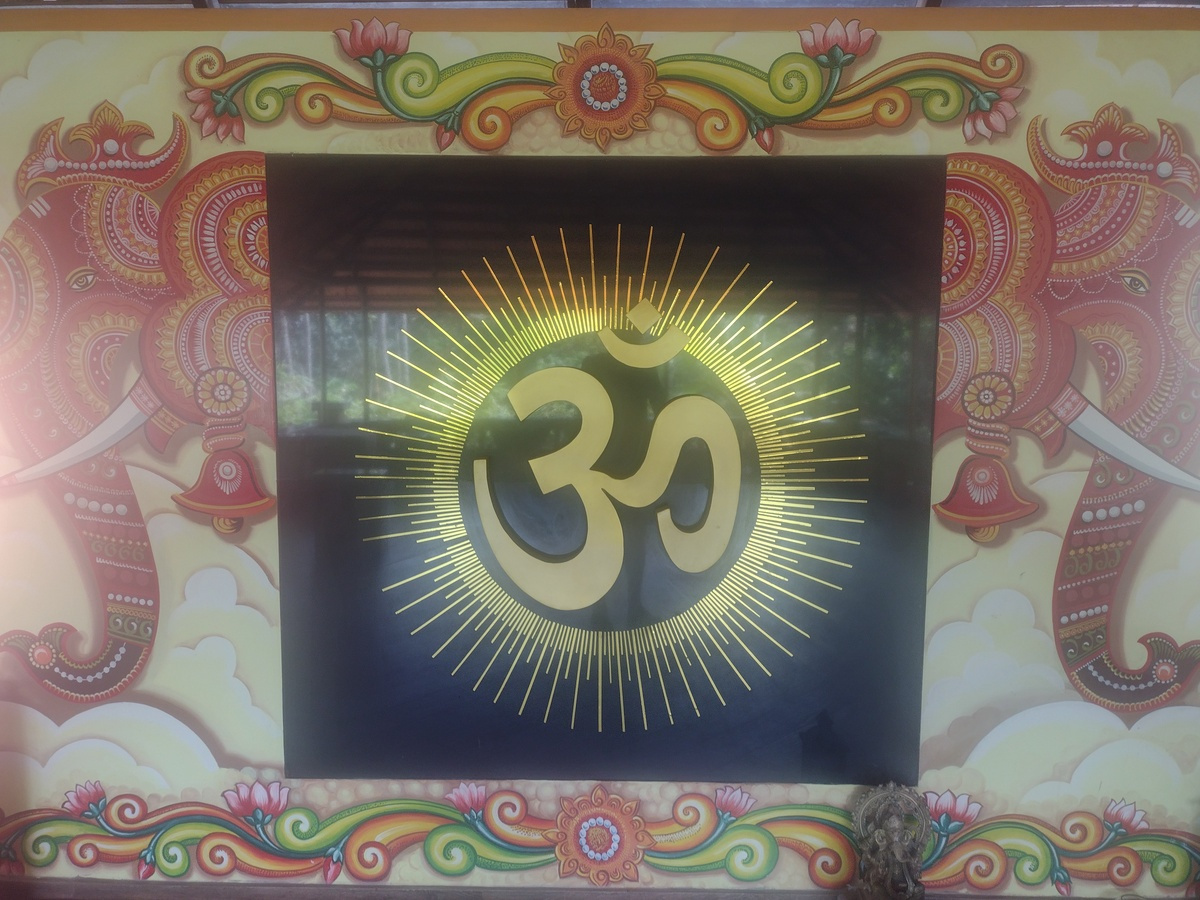
Speaking of which, yoga at the ashram was quite nice as well. The instructor and ashram owner Ravi-ji led a consistent sequence every morning that focused specifically on the issues that afflict those who come seeking healing. If I ever start teaching yoga, I definitely have a solid go-to routine for back pain, which I recorded in an easy to follow PDF document I shared with the new friends I made at Sivasoorya.
We also did yoga nidra practice every day and I learned that I am now a snorer. I never snored before, but of late, I have been snoring whenever I fall asleep in nidra or shirodhara.
So the big takeaways from this part of the stay was that I need to self-apply oil to my body or get regular oil massages and to do yoga every day – the latter of which should not be a problem.
The Diet Challenge
That brings me to quite possibly the most critical component of ayurveda. It’s the beast in the room that no one really wants to face off with – diet.
We all love food and I am no exception. Many of us love coffee, sweets and other things we know are bad for us. And as ayurveda teaches, we probably have a few strong likes that seem healthy enough but are not what we should be eating – for example, cold water, raw vegetables, fruits mixed with other foods or certain grains.
I write this sentence just moments after a guy walks by on the train offering 15 rupee cups of coffee or chai. I really want one but know I shouldn’t succumb. It has been nearly a month since my last coffee or tea. One would think I would be over it, but no, it seems stronger than ever now that I am loose and free in the real world again. Like any other addiction, caffeine is a “cunning, baffling and powerful” foe.
That brings us to food. Ayrurveda recommends only two to three meals per day for most people – a big brunch and light dinner for us kapha types and more frequent smaller meals for vatas.
Our chef, Ragu, serves a special Vishu holiday meal to Tyler, Maria and Lena.
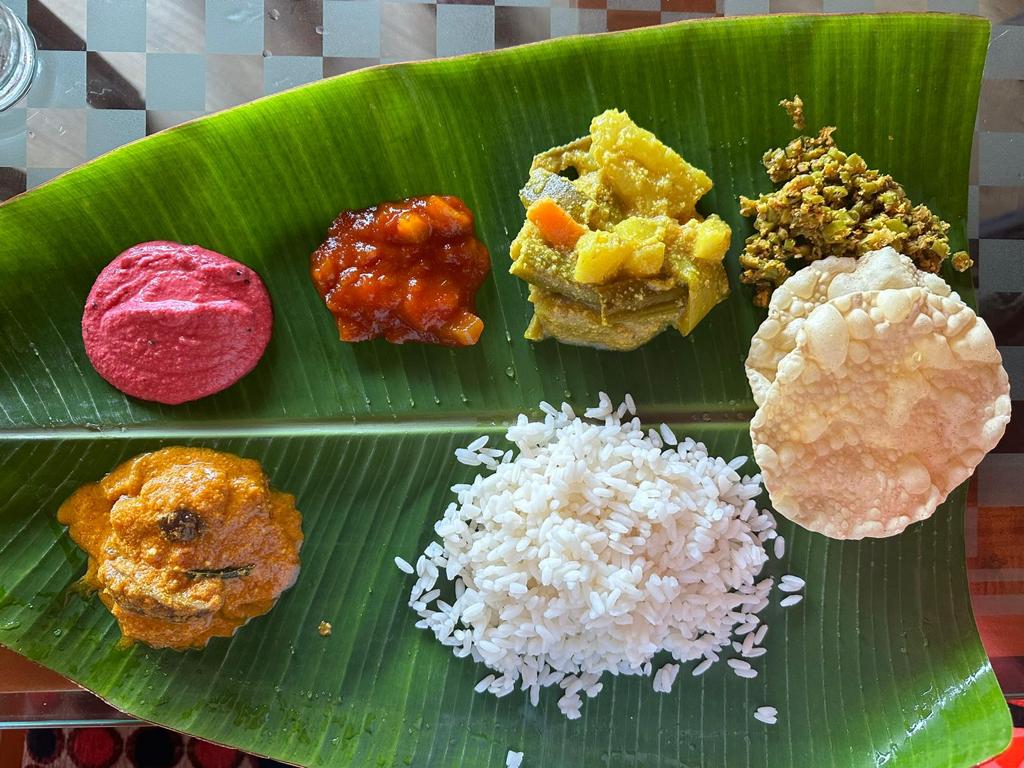
What I experienced in the various ashrams I visited is that heathy food can be quite creative. Sivasoorya's in-house chef Ragu made some wonderfully sattvic meals, specifically of the south Indian variety. He would whip up everything from dosa and idli sambhvar in the mornings to special treats, including a rice noodle dish called iddiyappam on my final night there.
But the key is making sure the food is prepared fresh, daily. Ayruveda does not even recommend reheating a nice meal the following day. Raw, frozen or canned vegetables should be avoided and preferably use only foods that are local and in-season in your region, which are few and far between during winters in Ohio.
When I settle into to a daily routine after this trip, finding time to cook will pose a challenge and I can’t afford to have a Ragu in my home. No big pans of salad anymore and I can’t make a large meal and have it a couple nights in a row. And imposing a bunch of dietary restrictions on my mother when I visit seems to be a bit onerous.
This is going to be the challenge as I move forward. I know I need to have a healthier and better-informed diet but it’s no easy task to get there from here.
And coffee and sweets … will I be able to resist the temptation or will I cave? Luckily this short train ride to the southernmost tip of India is almost over and the coffee guy has only wandered past one other time peddling his sinful wares.
How the devilish imp on my left shoulder really wants to indulge on this first day of freedom but the halo-wearing angel on my right whispers about how much better I will feel in the long-run if I resist. Just like with alcohol and tobacco, I knew the potential reward was great but the immediate sacrifice was indeed harsh at times.
As the Buddha says: "Life is suffering. To end suffering, end desire. To end desire, follow the Eightfold Path." The Buddha was lucky they didn’t have coffee in this part of the world back then.
 For those readers with little to no idea what all this means, I will try to explain to the best of my ability.
 Kapha people, on the other hand, are very content with life. They don’t usually seek to venture out but maintain a happy and healthy home life. They are very caring and compassionate toward others but don’t often express their feelings in words. Their body type is usually thick build and can lead to obesity when kapha is unhealthy. I guess I fit some of these qualities but I feel I have a lot to work on in the departments of empathy and compassion and my body type seems off the mark.
 Speaking of which, yoga at the ashram was quite nice as well. The instructor and ashram owner Ravi-ji led a consistent sequence every morning that focused specifically on the issues that afflict those who come seeking healing. If I ever start teaching yoga, I definitely have a solid go-to routine for back pain, which I recorded in an easy to follow PDF document I shared with the new friends I made at Sivasoorya.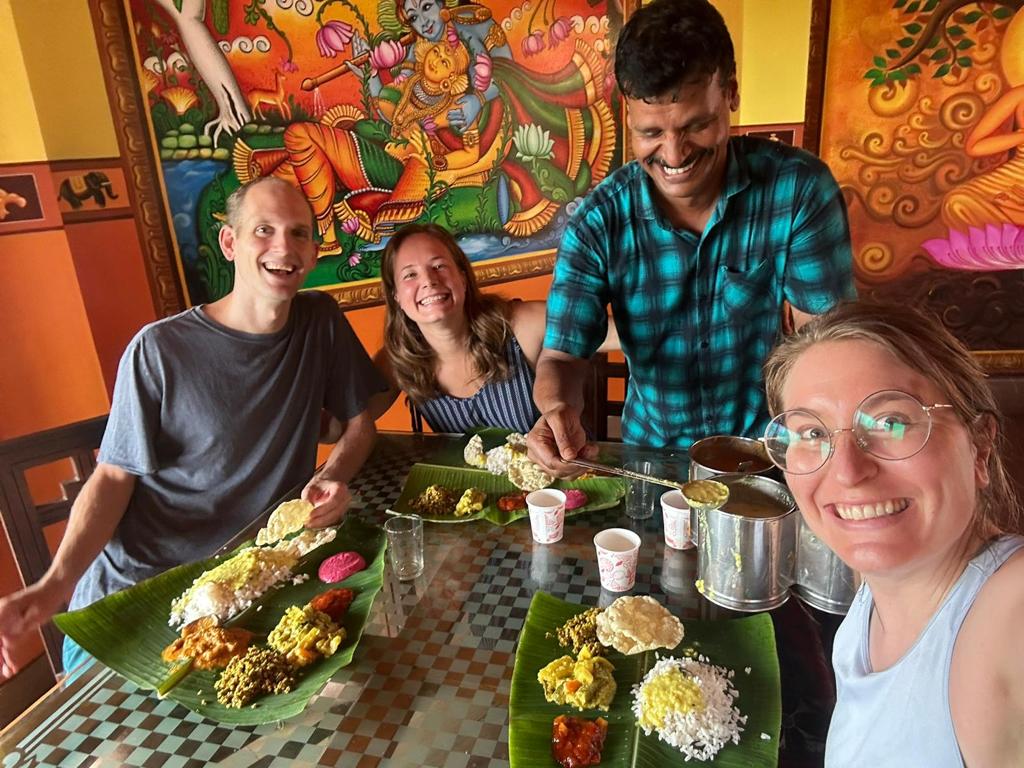
 But the key is making sure the food is prepared fresh, daily. Ayruveda does not even recommend reheating a nice meal the following day. Raw, frozen or canned vegetables should be avoided and preferably use only foods that are local and in-season in your region, which are few and far between during winters in Ohio.