Awesome AA
I am assuming most of the people reading this blog already know that I am an alcoholic and addict who has found recovery through the 12-Step programs. If not, surprise. I have been clean and sober almost a full decade now and I owe that entirely to the fact that I have remained close to the fellowship of Alcoholics Anonymous.
If you are one of those Eleventh Tradition purists who would accuse me of breaking my anonymity of the level of press, radio, film (and the internet), you are probably right, but it’s my anonymity and not yours. Plus, how many people will ever read this, or really care?
So with that out of the way, I will talk a little about the recovery community here in Bali (without breaking anyone else’s anonymity).
 Just a few days after arriving in Ubud, I found the local 12-Step hangout at a place called the Wahyu Cafe, right in the heart of Ubud. There are meetings of various 12-step groups two to three times per day, every day of the week, although I have primarily been attending the 9 a.m. AA meetings, which attract a fair number of people – both local expats and visitors to the island, who are just passing through.
There are people with all levels of sobriety from the crusty AA old-timers to the raw newcomers to the people who have slipped up after a few years and are finding their way back into the rooms. I have had the pleasure to make friends with a few of them, including a Ukrainian close to my own age, who plans to open a center for veterans when the conflict in his war-torn homeland ceases; a young American woman, who I had the pleasure of sitting next to at her first meeting and have watched blossom in her first month of sobriety; and a few really kind local expatriates who have been keeping the doors of these meetings open for years.
 Unbeknownst to me before coming to Bali, the island is the site of a pretty large Founders Day weekend International Roundup convention, which just happened to coincide with my visit. So while many of my friends in recovery back in Ohio were rolling p to Akron for the big convention that draws ten thousand plus attendees, I was with you in spirit among about five hundred fellow alcoholics from all over the globe.
It was definitely a great way to spend the weekend, listening to international speakers and a panel of locals and their visiting friends speak on a variety of different topics.
As an added bonus, the convention was at a ritzy hotel in the beach town of Sanur and we had a Sunday morning yoga class on the ocean, based on the Eleventh Step, followed by a meditation on the same topic. It was really a great way to spend the weekend.
In addition to that, this past Saturday, five of us loaded up in a Toyota mini and rode about thirty kilometers up the mountain to a place where of our local members hosts a monthly Mountain High gratitude meeting. He feeds all the members a wonderful Balinese buffet lunch afterwards.
When sharing on the topic of gratitude that day, I reflected that I was blessed to have found such a “privileged” group of people who I now include in my ever-growing recovery family.
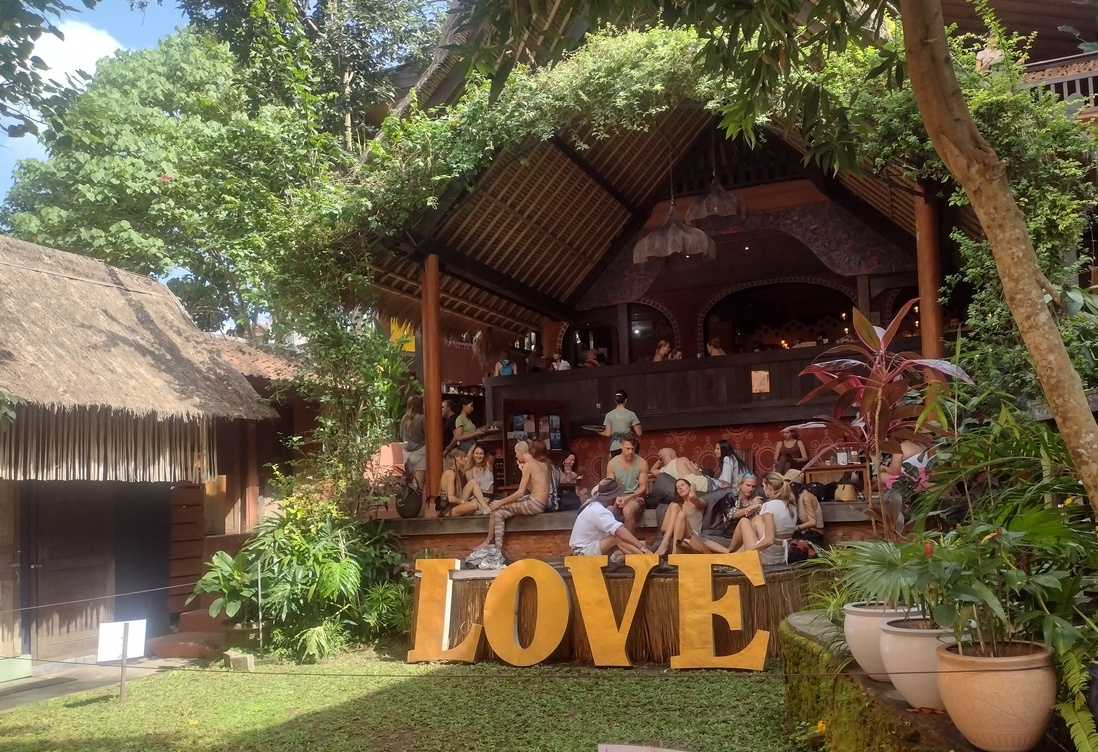
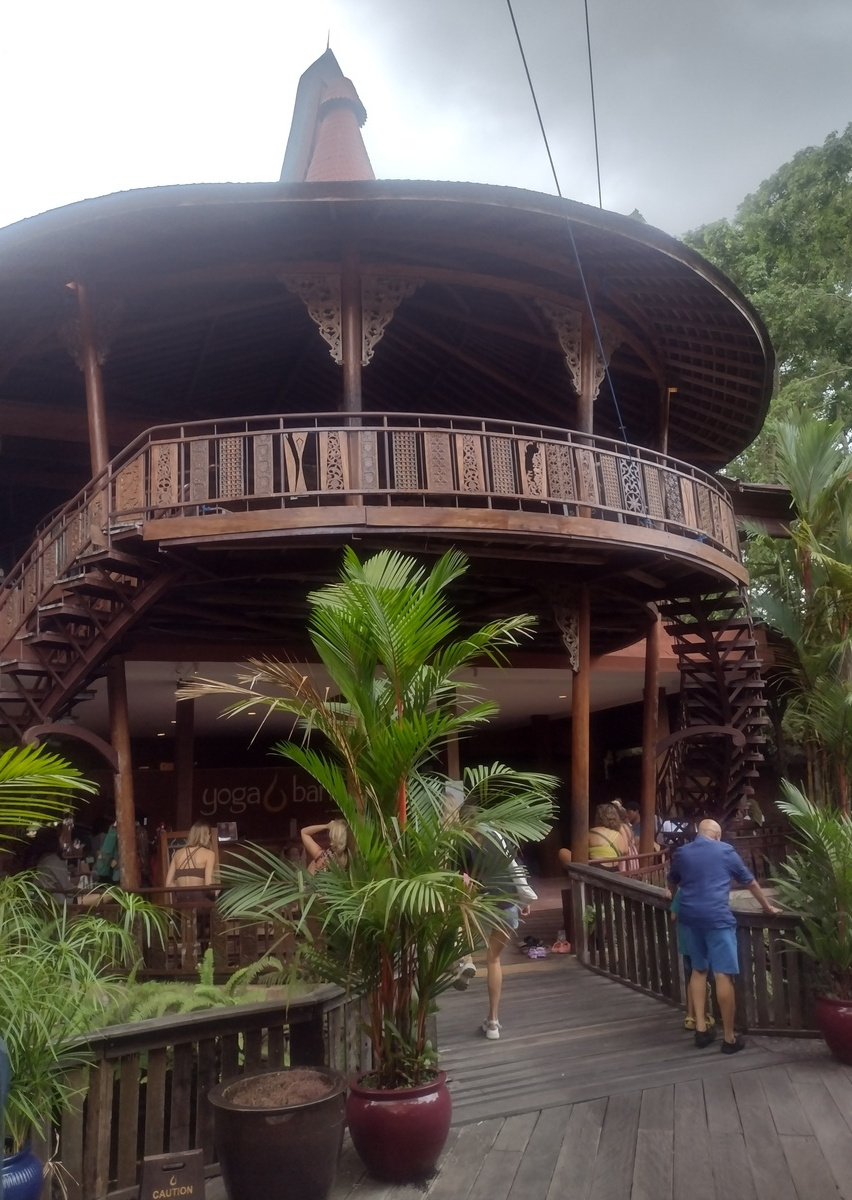 At first I did not know why they called it a barn as it is more like a whole farm and none of the buildings remotely resemble what we call barns back in the farm belt of the Midwest. But one Sunday morning, with a crowd of people leaving our kundalini class interspersed with a throng of people making their way into an ecstatic dance, it felt like we were cattle or sheep being herded about.
 I’ve primarily been going there just for the kundalini classes as the Yoga Barn is a 45-minute walk from my apartment. I realized that although I got a kundalini yoga teaching certificate, I had no real experience with actual kundalini classes. Having been to classes with three different teachers there and my limited prior experience, I am starting to get the feel for the flow of a real kundalini class although I do not feel entirely qualified to teach it – not that I plan to be a full-time yoga teacher or anything.
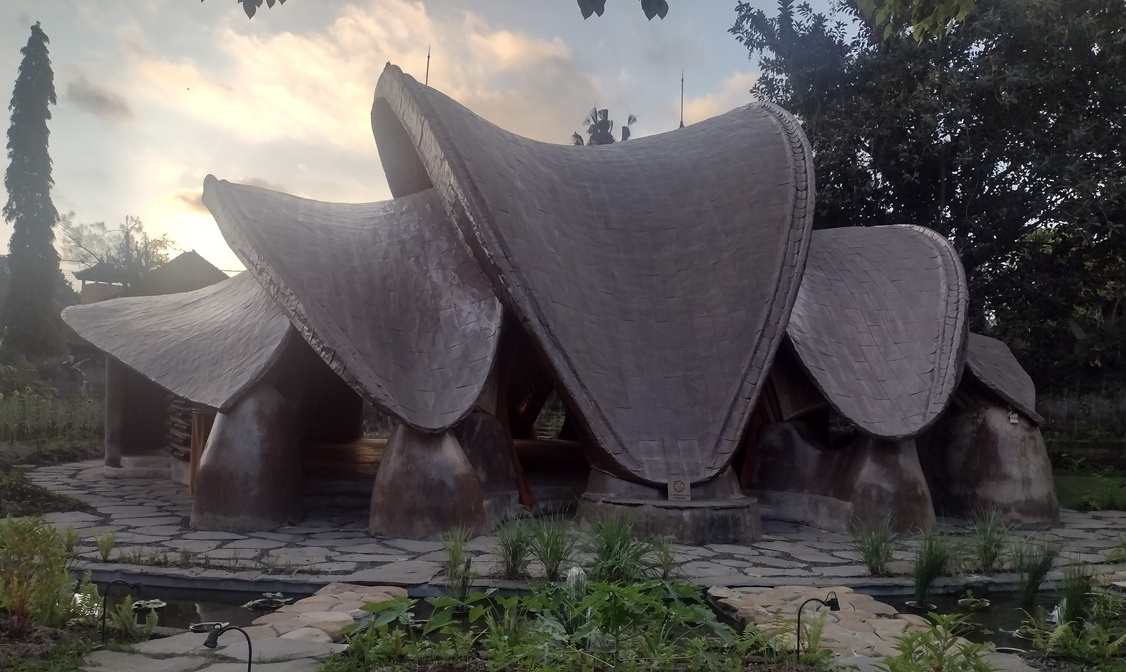 I actually started my yoga experience in Bali at a place called Alchemy Yoga and Meditation Center, which is only about a half kilometer from where I stay. I bought a six-class pass that let me attend one class on each of the five elements and their special Krama sequence. It was a nice place to practice but it felt very much like the yoga that we have back in the United States – more vinyasa flow and less traditional Indian approach interspersed with new age feel good jargon instead of actual yoga philosophy.
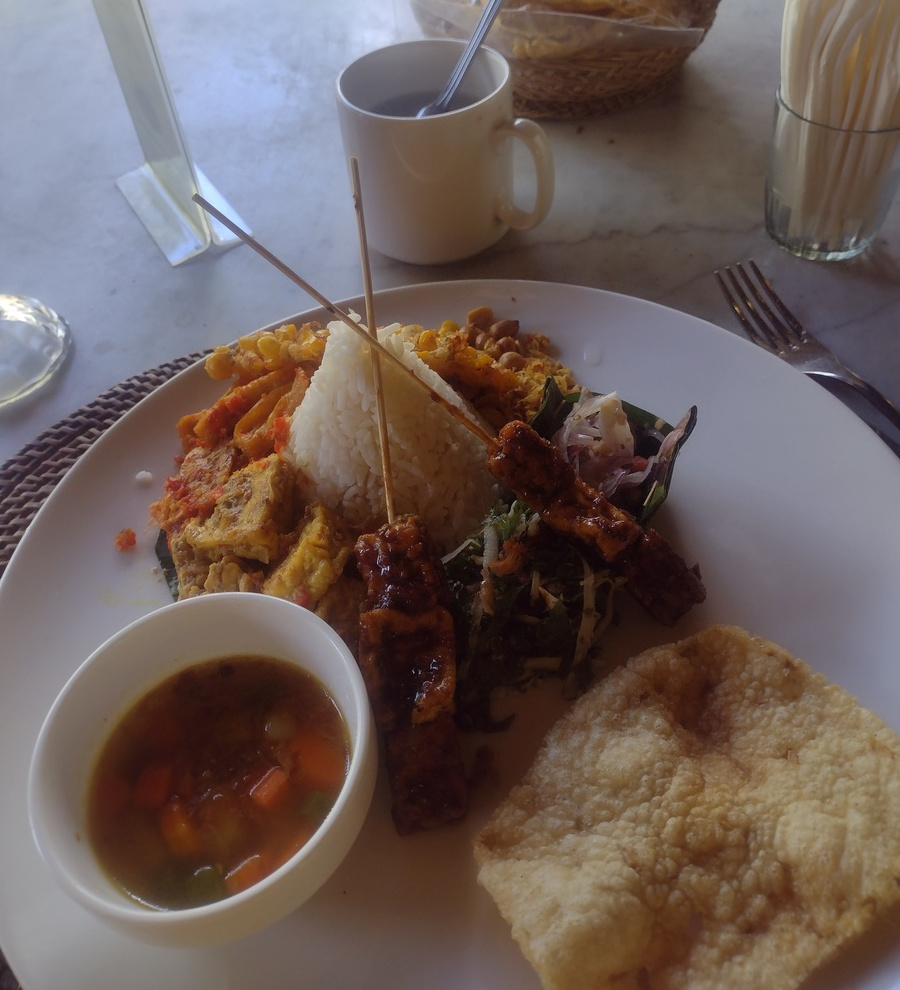 I have also started learning Indonesian language, or Bhasa, and can recognize and ask for foods by their local names. Probably some of the most notable words are nasi for rice; mie is noodles; goreng is fried; ayam is chicken; and tidak is no (which has a lot more use than in just ordering food.)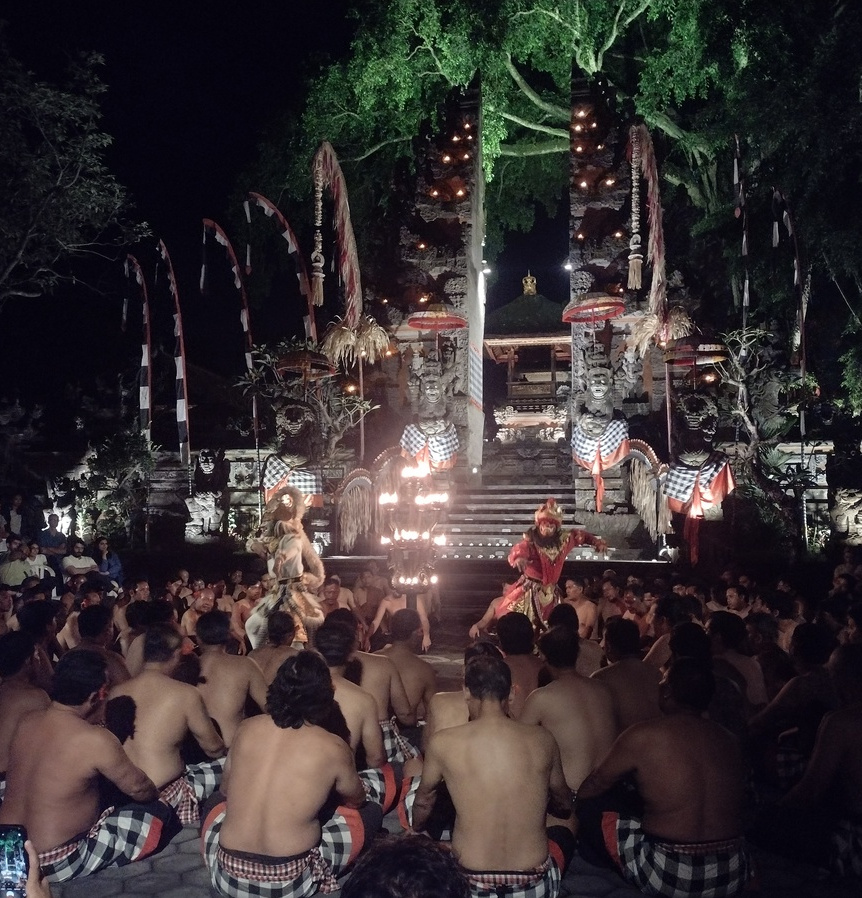
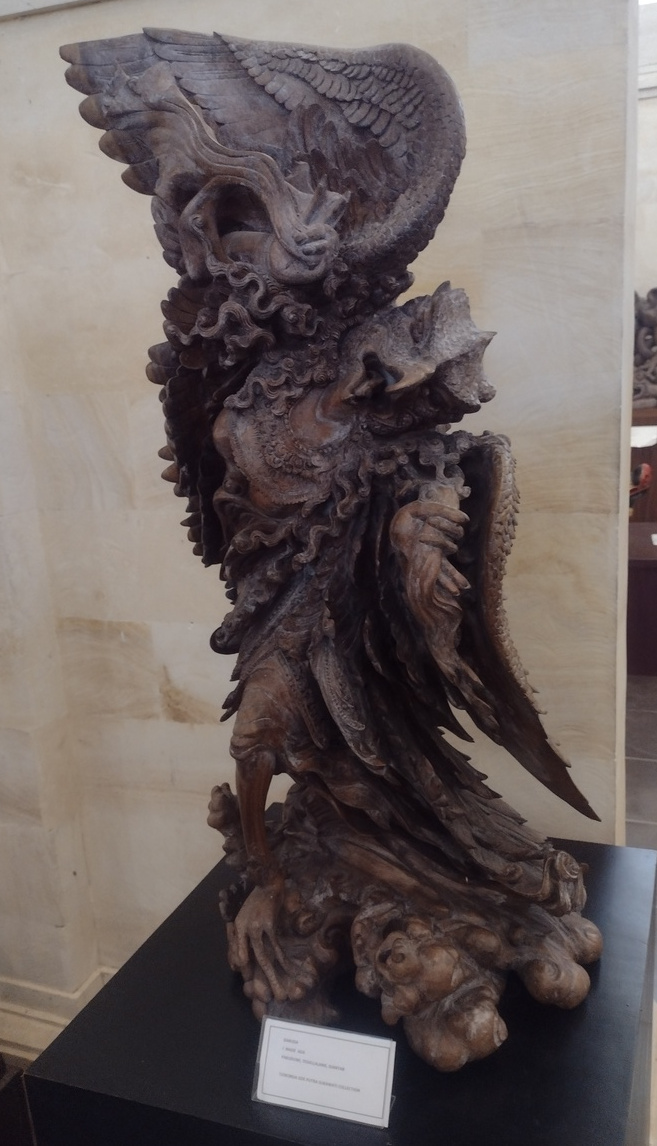 I also visited the nearby museum of modern art, where the art features the not entirely grotesque demons that are a common motif in Balinese art, along with flowing feminine designs and other colorful scenes of Indonesian life.
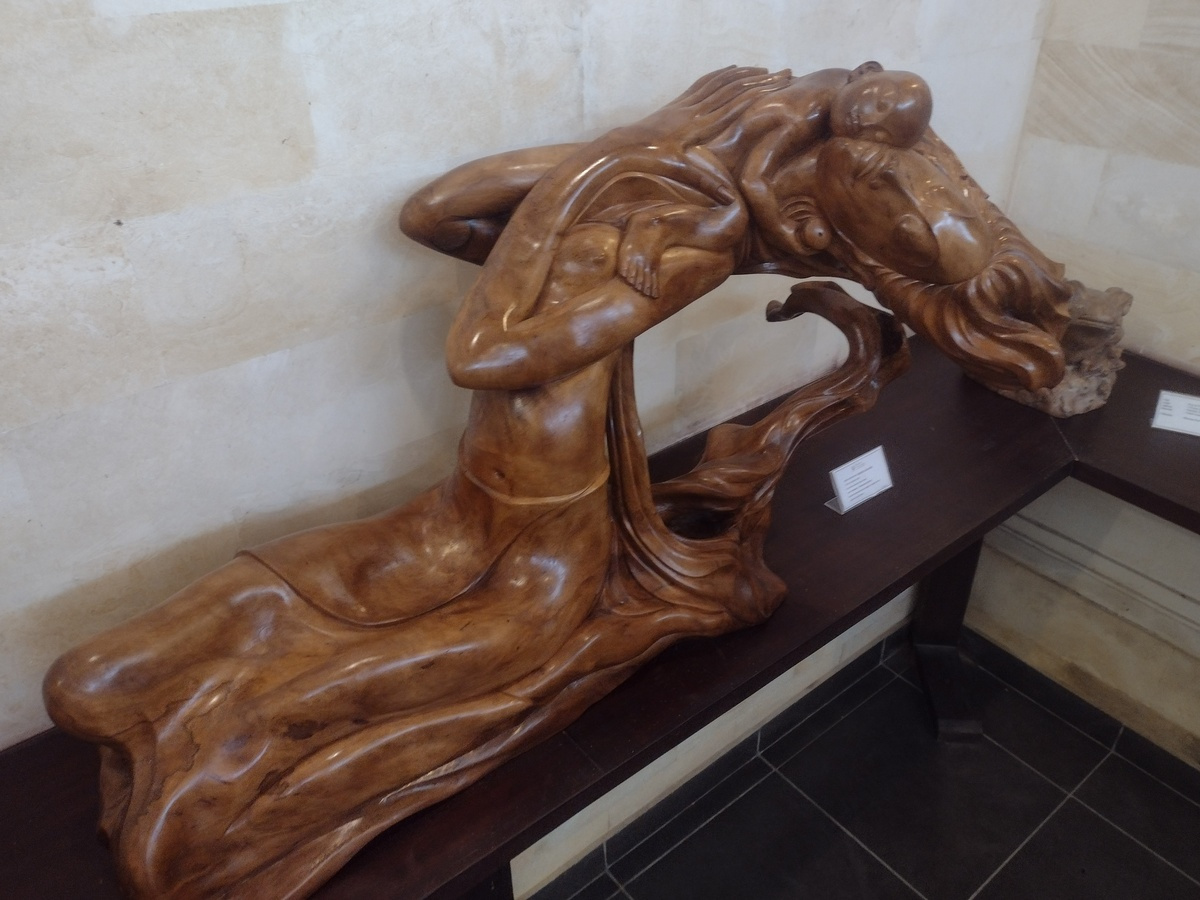 While the paintings in the museum were nice, I was much more fascinated with the intricate wood carving work I saw on display. It amazed me the way the sculptors could release these delicate images from a piece of wood.
 Some people I have met on this yearlong journey have expressed displeasure with their professional life before traveling abroad, but that isn’t really the case for me. I actually enjoy my work and did not enroll in a Yoga Teacher Training Course to become a full-time yoga teacher.